

This story was commissioned by Europe’s Edge. Since Substack pays only around a fifth of my bills, I have no choice but to take on a lot of freelance work. I still want my Substack audience to know where to read those freelance stories, however. Hence this excerpt.
American commanders have known for decades that they have an air base problem. Too many expensive warplanes parked on the aprons at too few big, unprotected airfields within range of enemy missiles amounts to “significantly increased risk” for U.S. air power, the U.S. Air Force explained in a 2022 doctrine reflecting more than 15 years of thought on the subject.
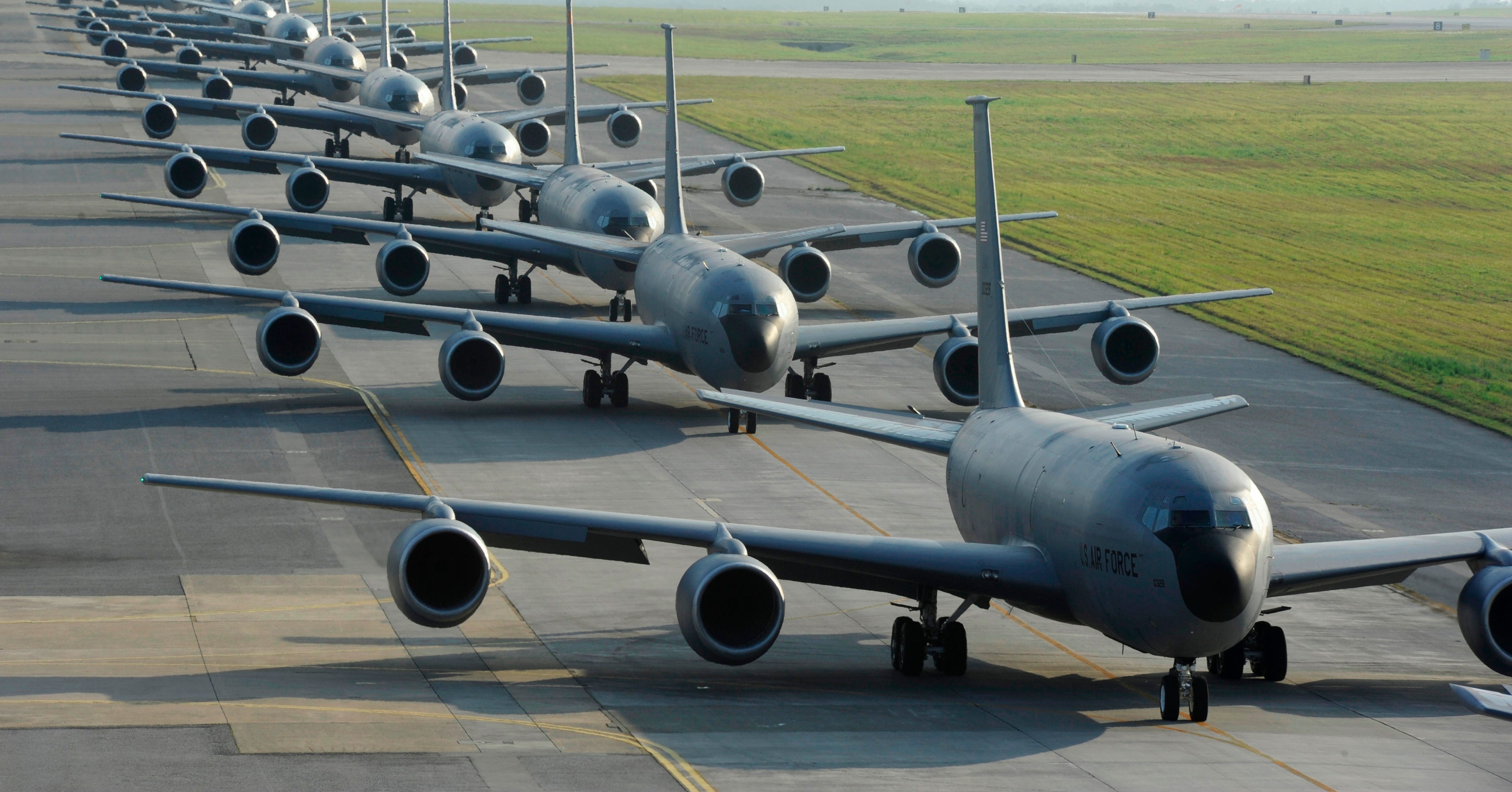
So why were more than a dozen USAF Boeing KC-135 tankers and other big, expensive aircraft—including several increasingly rare Boeing E-3 radar early warning planes—parked out in the open at Prince Sultan air base in Saudi Arabia, barely 500 km (about 300 miles) from Iran, as U.S. and Israeli forces bombarded Iran in mid-March?
The tankers and radar planes were easy targets for Iran’s thousands of ballistic missiles and one-way attack drones. Readily available commercial satellite imagery allowed any country and even civilians to keep close tabs on parked aircraft.
The Americans’ folly was evident as Iranian munitions rained down, overwhelming U.S. and allied air defenses. Five KC-135s sitting in orderly rows on Prince Sultan air base’s apron were damaged on March 13. And on March 27, an Iranian raid blew up an E-3 on a taxiway.
The Iranian attacks weren’t as destructive as Ukraine’s June 2025 drone raids on Russia’s bomber bases. The Ukrainian Operation Spider Web, which smuggled hundreds of tiny drones deep inside Russia inside trucks, destroyed more than a dozen irreplaceable Russian air force bombers. But the Iranian and Ukrainian raids made the same point: warplanes are vulnerable on the ground.
Read the rest at Europe’s Edge.
Help Trench Art Grow To 700 Paid Subscribers

It took a year of hard work, but Trench Art just climbed past 600 paid subscribers! Celebrate with me and keep the momentum going with a 20% discount on paid subscriptions. Just $36 a year for daily war news and analysis.Trench Art is a reader-supported publication. To receive new posts and su…
It’s like no one in command had heard of Pearl Harbor—oh wait…https://www.independent.co.uk/news/world/americas/us-politics/trump-pearl-harbor-new-book-very-stable-genius-b2700639.html