

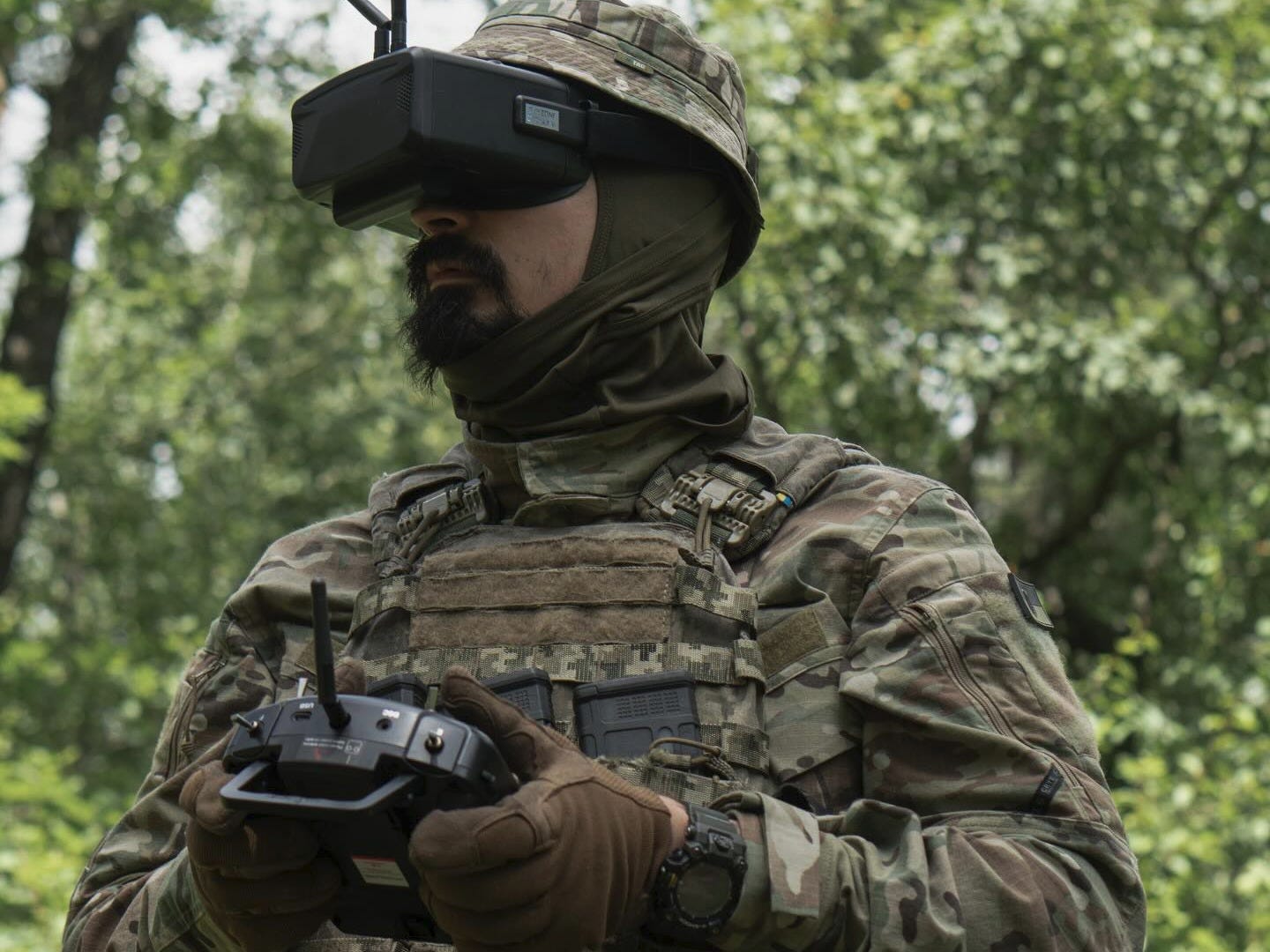
For six months between late 2024 and early 2025, Slovak volunteer Jakub Jajcay served with a Ukrainian first-person-view drone team fighting in eastern Ukraine. “When I joined the team, I was excited to work with a cutting-edge tool,” Jajcay wrote in a controversial piece for War On The Rocks. “By the end of my deployment, I was a bit disillusioned,” he added.
Among other flaws, FPV drones are “highly susceptible to electronic-warfare jamming,” Jajcay wrote. Moreover, “wind, rain, snow and fog all mean a drone cannot fly.”
Cannot fly is an overstatement, but Jajcay is correct that fog, which is common in Ukraine in winter, can effectively blind an FPV unless other capabilities—ground robots or radio eavesdropping—steer the drone to within 50 feet or so a target. Close enough for the operator to make out the shape of a vehicle.
Well, most drones. New FPVs with A.I.-assisted targeting don’t need a lot of help. As the newly formed drone battalion assigned to the Ukrainian 1st Azov Corps dramatically demonstrated recently, A.I. drones can pick out the shapes of vehicles in conditions of poor visibility.
