

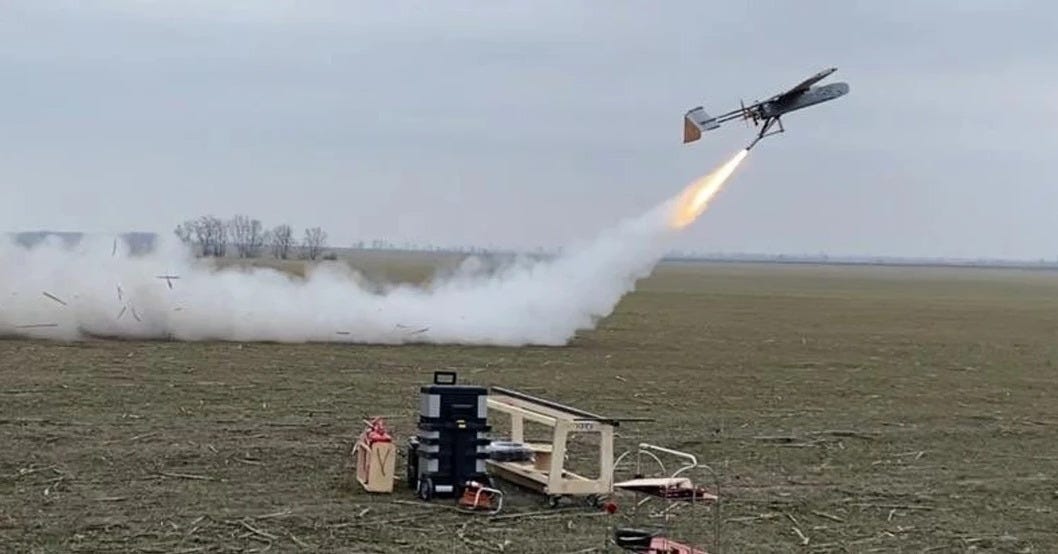
For four years, Russia launched far more long-range missiles and drones than Ukraine launched back. In the summer of 2026, the balance flipped. That’s when Ukraine began hitting Russia harder than Russia hit Ukraine.
The change didn’t happen fast or easily. The Ukrainians slowly and steadily developed better and cheaper long-range drones and cruise missiles while also striking at Russian factories in order to disrupt Russia’s own production of missiles and drones.
At the same time, the Ukrainians degraded Russia’s air defenses in order to enable the escalating deep strikes on Russian soil.
The Ukrainians’ goal was to raise the cost of the Russian war effort. No one who matters believes bombardment alone can win the war, of course. But it might hasten a negotiated peace.
In June, Russian forces launched around 6,000 Geran one-way attack drones and cruise and ballistic missiles at Ukrainian cities. Ukrainian air-defenses typically shoot down 90% of incoming Gerans, around half of incoming cruise missiles and maybe a fifth of ballistic missiles, but the 600 or more missiles and drones that probably got through in June still amounted to a lot of missiles and drones—and a lot of damage, injuries and deaths in Ukrainian cities.
But the 6,000 munitions figure is actually good news for Ukraine. After all, the Russians launched more than 8,000 deep strike munitions in May. And in both March and April they launched more than 6,500.
And while Russian deep strikes dipped between May and June, Ukrainian deep strikes spiked. The Ukrainians launched 9,000 drones and missiles in May and exceeded that pace in June, finishing the month with 11,500 launches. That’s 2.5 times as many as in April.
How many of the 11,500 munitions got through Russia’s fraying air defenses is hard to say. But it’s possible the Russians enjoy an interception rate that’s similar to the Ukrainians’ own rate: around 90% on average across all enemy munitions types.
All that is to say, it’s conceivable that Ukrainian forces scored 1,150 hits on major targets in Russia and Russian-occupied territories in June. Nearly twice as hits as the Russians scored the same month.
