

This story was commissioned by Euromaidan Press. Since Substack pays only around a fifth of my bills, I have no choice but to take on a lot of freelance work. I still want my Substack audience to know where to read those freelance stories, however. Hence this excerpt.
The scale of Ukrainian forces’ counteroffensive in southeastern Ukraine early this year is finally becoming clear. In six months of maneuver, a clutch of Ukrainian units, including the 78th, 79th, 80th, 82nd, and 95th Air Assault Brigades and the 1st and 425th Assault Regiments—tens of thousands of troops, in all—marched through gaps in Russian defenses and, according to Ukrainian officials, liberated around 745 square km and 26 settlements. Mostly in Dnipropetrovsk Oblast but also in neighboring Zaporizhzhia and Donetsk Oblasts.
That is Kyiv’s own accounting, and it is the high end. The Institute for the Study of War, which maps control from geolocated imagery, put the figure at roughly 627 square km across the Oleksandrivka direction and the northern Hulyaipole direction—while noting its own conservative method probably undercounts. Either number describes the largest Ukrainian territorial gain since 2023.
The Ukrainian gains helped to offset Russian gains around the last few free cities in eastern Ukraine’s Donetsk Oblast. Between the start of February and the end of July, Russian regiments captured a net total of just 260 square km of Ukrainian soil, according to a tally by the Black Bird Group. It would’ve been more than 1,000 square km if those air assault and assault units hadn’t been busy clearing the Russians from a wide swathe of the southeast.
The Ukrainian counteroffensive kicked off on Jan. 29. Three days later, Elon Musk’s Starlink bricked Russia’s thousands of smuggled and stolen satellite terminals. Practically overnight, the Russians lost their best method for controlling small drones and guiding assault units across the disputed gray zone. Drones couldn’t fly. Troops couldn’t navigate.
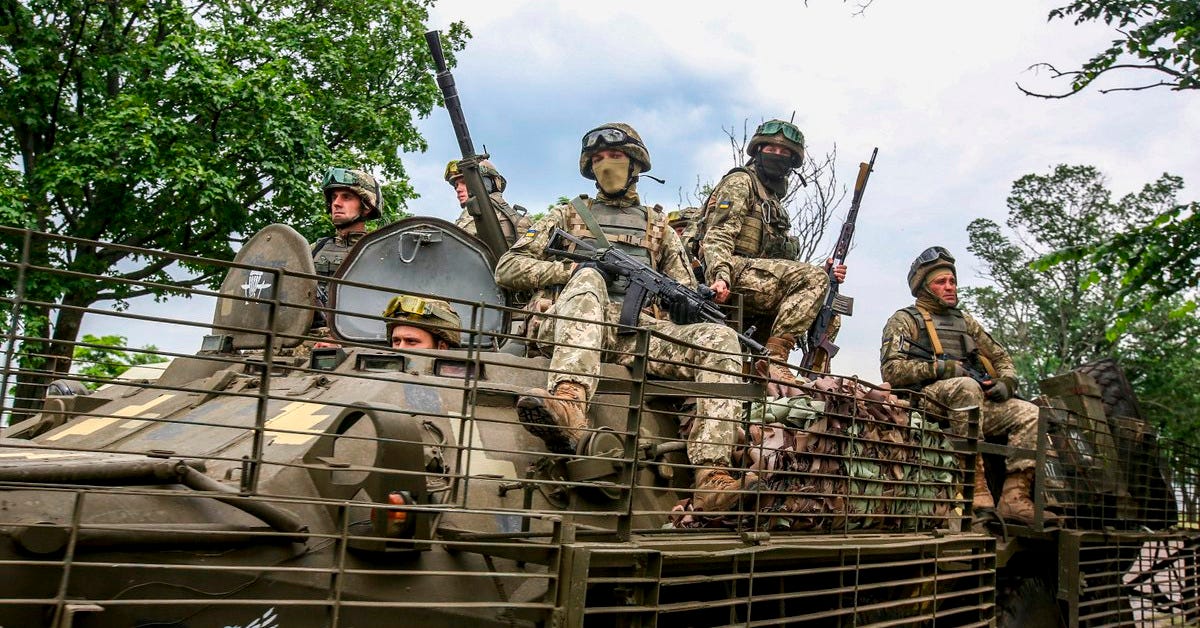
Ukrainian commanders surely knew their communications advantage wouldn’t last: the Russians would eventually adapt with new methods of command and control. Seizing the opportunity, Ukrainian paratroopers and assault troops pressed the attack. And in stark contrast to the usual assault tactics for both sides, the Ukrainians attacked in tanks and other armored vehicles, counting on the Russians’ connectivity problems to clear a path for heavy forces.
Read the rest at Euromaidan Press.
Help Trench Art Grow To 700 Paid Subscribers

It took a year of hard work, but Trench Art has climbed past 600 paid subscribers! Celebrate with me and keep the momentum going with a 20% discount on paid subscriptions. Just $36 a year for daily war news and analysis.Thanks for reading Trench Art! This post is public so feel free to share it.