

by PAUL IDDON
Months after the 12-day Israel-Iran war in June, a PBS Frontline team visited Iran. At one point, their government minders insisted on showing them a questionable target of the Israeli campaign.
Israeli fighter jets had bombed a civilian airport near Karaj, north of Tehran. The airport contained small, unarmed propeller-driven planes used for pilot training and private recreational flying. “There was nothing [of concern] here,” an airport official told them.
But Tehran did once acquire turboprops for nefarious purposes.
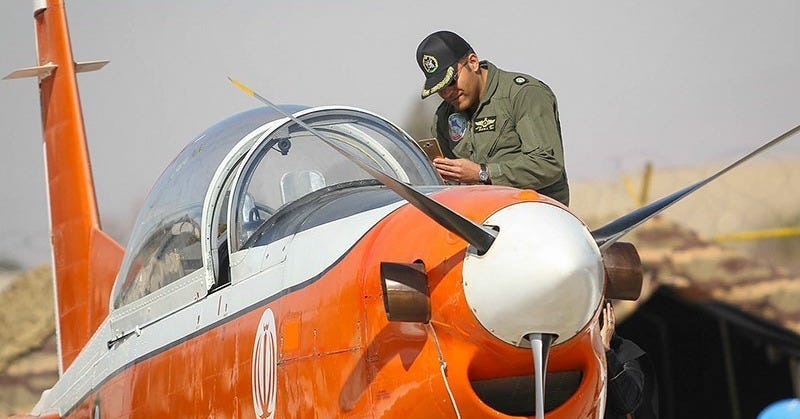
During the lengthy Iran-Iraq War, Iran’s new Islamist regime found it difficult to buy any combat aircraft. It succeeded in purchasing Pilatus PC-7 Turbo Trainer planes from Switzerland, however.
According to the Stockholm International Peace Institute’s arms control database, Iran acquired 35 PC-7s in 1983 and 1984. SIPRI noted that it originally ordered 80.
Such aircraft, with a top speed of around 250 miles per hour, would hardly pose any threat to Iraq’s French and Soviet fast jets. That didn’t matter. Iran had another mission in mind for them.
As early as January 1984, U.S. intelligence warned that terrorists in Lebanon and Iran could soon use gliders, helicopters or small planes for kamikaze attacks against U.S. warships.
