

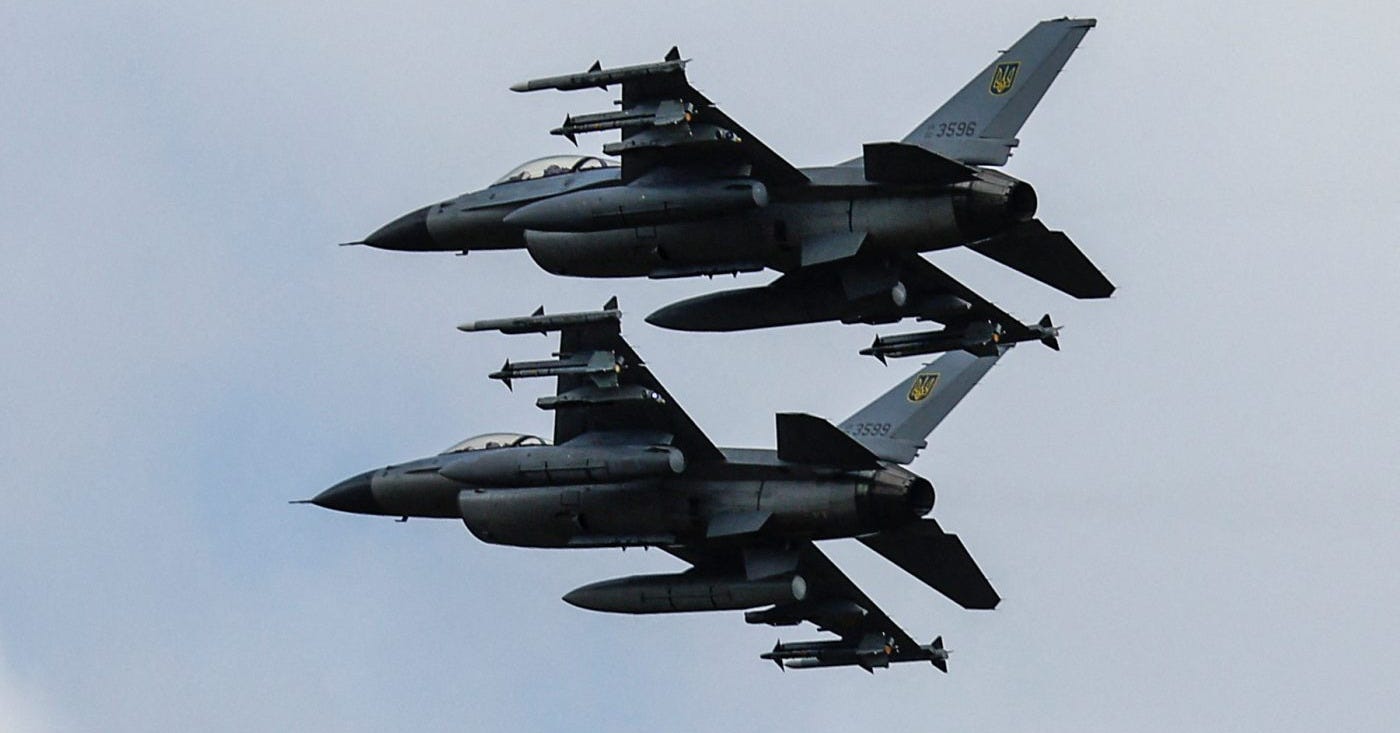
In a virtuoso display of air-defense prowess unimaginable for any European member of NATO, Ukrainian forces shot down 34 out of 35 cruise missiles on December 22. It was even more notable given Ukraine’s defenders were also warding off another 638 Russian rockets and drones that same midwinter’s night.
Col. Yurii Ihnat, head of communications for the Ukrainian air force, told Ukrainian Pravda the cruise missiles were “mainly” shot down by F-16 fighters transferred by European allies.
Against all odds, the tiny Ukrainian air force hasn’t just survived its clashes with a Russian air arm 10 times its size, it has managed to modernize under fire, upgrading old ex-Soviet MiGs and Sukhois while inducting F-16s and ex-French Dassault Mirage 2000s, and integrating all the diverse airframes with some of the latest Western-made precision munitions.
But that success belies a worrying trend as Russia’s wider war on Ukraine grinds toward its fifth year.
Ukraine’s leaders are wasting this potent force. Supersonic F-16s compatible with Sniper targeting pods, armed with GPS-guided Small Diameter Bomb glide munitions, and protected from Russian missiles by underwing electronic countermeasures shouldn’t be circling Kyiv, shooting down cruise missiles. Instead, they should be taking the fight to Russian forces along the forward edge of battle in eastern Ukraine.
It’s obvious why they aren’t. They lack enough precision bombs. And that’s a problem Ukraine and its allies should address with haste.
The 87 1980s-vintage—but heavily upgraded—F-16s that Belgium, Denmark, The Netherlands and Norway have pledged to Ukraine, dozens of which have arrived since the first landed in August 2024, are Ukraine’s best battlefield interdiction assets.
More than any other Ukrainian weapon system, the nimble F-16s can strike at Russian troops (and their supporting artillery, drone teams and logistics) at the moment that matters most: right before the troops march into battle against outnumbered, outgunned Ukrainian troops.
With rigid state control of the media, generous enlistment bonuses, and brutal coercive recruitment tactics, the Russians continue to generate more fresh manpower every month than they need to replace combat losses.
Meanwhile, Ukraine’s own mobilization system is in a state of slow collapse owing to Ukraine’s much smaller population, a widespread sense that the system is unfair, and the tendency of Ukraine’s worst commanders to squander fresh troops on pointless, politically motivated counterattacks—a habit that has deeply undermined Ukrainian morale.
The upshot is that, in the most important sectors of the 1,200 km (about 800-mile) front line, the Russians have a five-to-one manpower advantage. And they’ve adapted their battlefield doctrine around this edge, parking armored vehicles in favor of costly but effective infantry infiltration.
In every one of the front-line towns and cities Ukraine lost or came close to losing in 2025—Toretsk, Pokrovsk, Myrnohrad, Siversk and Huliaipole, among others—Russian success came not in the form of swift, carefully calculated mechanized assault, but through large numbers of infantry rushing forward in small groups, day after day, despite horrific losses.
Unless and until Kyiv can reform its failing mobilization system, the Ukrainian armed forces must find some way to blunt Russia’s manpower advantage, and must do so where that manpower is most vulnerable to attack. F-16s lobbing glide bombs would be just the thing.
Read the rest at the Center for European Policy Analysis.
Surprise! Ukraine's Mirage 2000 Fighters Are Now Packing 40-Mile Missiles.

One Ukrainian air force pilot loves his ex-French Dassault Mirage 2000 fighter. He doesn’t necessarily love the 40-year-old Magic 2 short-range, infrared-guided air-to-air missiles that, until recently, were the only missiles anyone outside of the Ukrainian air force had ever seen on the supersonic fighter in Ukrainian service.