

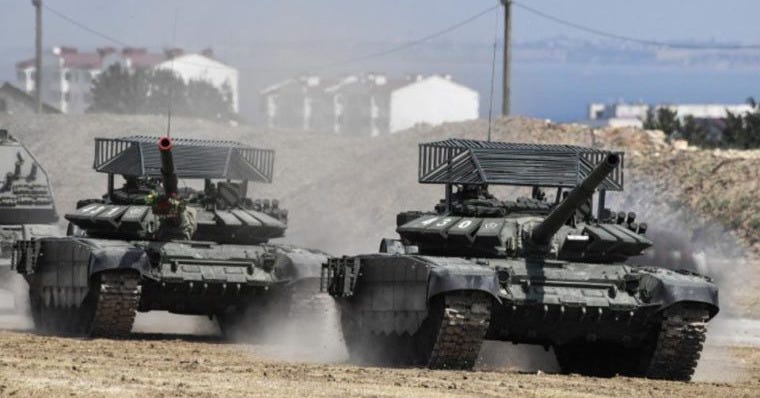
Russia has lost a lot of armored vehicles
But it has pulled even more out of long-term storage
Despite heavy losses, the Russian vehicle inventory is actually bigger today than it was in 2022
There’s low risk of Russia actually running low on vehicles before 2030
That’s a clear indicator that Russian mechanized assaults will continue
The Russian military has more armored vehicles than it did on the eve of Russia’s wider war on Ukraine in February 2022. And for one main reason.
Despite losing as many as 16,100 vehicles in action in Ukraine, the Russians have more than compensated for these losses by pulling nearly 13,000 old vehicles out of long-term storage—and complementing these older vehicles with around 4,000 brand-new vehicles.
The upshot is that the Russians had 20,000 vehicles in February 2022. 45 months later, they have 21,000. Yes, many of those vehicles are less sophisticated than the newer—and lost—vehicles they replaced. All the same, they represent a potent and enduring armored force. If the Kremlin chooses to use them sparingly.
The implication is a foreboding one for Ukraine and any other country Russia may target.
“Russia is not exhausting its armored reserves,” explained analyst Delwin, who crunched the numbers. “Modeling forward with constant 2025 loss levels and stable new production, the total fleet remains above 2022 levels through at least 2030.”
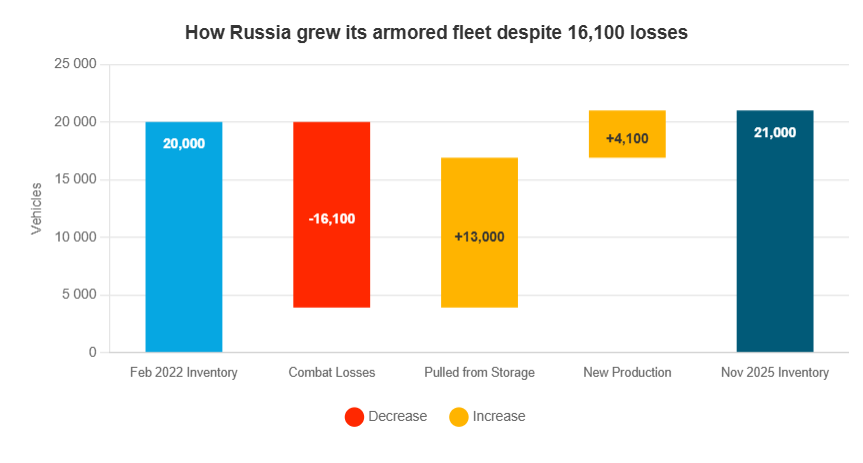
How Russia replaced 16,000 lost vehicles
Yes, Russia could struggle to make good major vehicular losses after 2030. That won’t help Ukraine, however—at least not now.
There are divergent trends inside Delwin’s overall figures, of course. According to Delwin’s count, which draws on the work of open-source analyst Jompy, there’s been a slight decline in the Russian tank inventory since 2022 even as the Russian armed forces have massively expanded with new regiments and brigades.
This makes sense, as the tanks’ main role has changed. As recently as 2022, large formations of tanks—sometimes dozens at a time—would operate independently or in combined-arms formations with other vehicle types. Tank attacks were still feasible ... and common.
But that was before tiny first-person-view drones were everywhere all the time along the 1,100-km front line of the wider war.
Read the rest at Euromaidan Press.
