

In 2025, the Russians mostly stopped using armored vehicles
It’s not that they lack vehicles: they’ve pulled many thousands from long-term storage
No, the Russians have de-mechanized because infantry tactics work better
The infantry can slip past drones that easily spot approaching vehicles
But Russian infantry casualties are mounting as they bear the brunt of the fighting
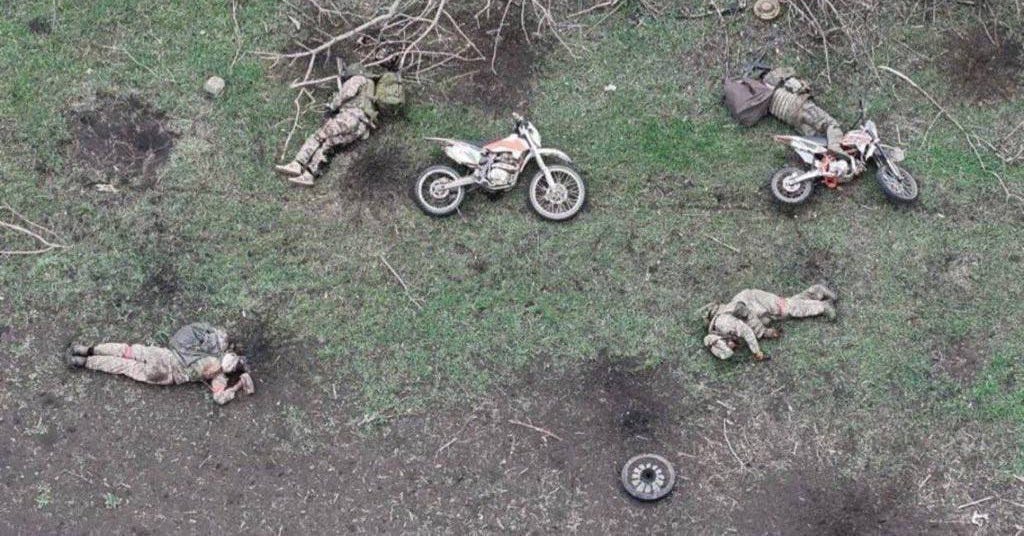
In 2025, the Russian armed forces in Ukraine traded vehicles for infantry. What was once among the world’s leading mechanized armies with tens of thousands of armored vehicles of all types instead became an army that mostly marched into battle on foot.
It was a costly new doctrine for the Russians: potentially around 100,000 Russian troops died—probably more than in any of the three previous years.
But it worked. The Russians advanced, and at a faster pace than before.
Will the new doctrine work again this year? There are reasons to be skeptical. Namely, the terrain Russia will fight on in 2026 is much different than the terrain it fought on in 2025—and it may favor Ukraine.
Looking back 12 months, the open-source analysts at Warspotting identified the moment the Russians parked their vehicles. “Something changed starting late April/early May,” the group explained.
In those few weeks, daily Russian vehicle losses dropped by half to fewer than eight per day. The decline coincided with the culmination of Russia’s successful counteroffensive that ejected Ukrainian forces from Kursk Oblast in western Russia following a nine-month battle.
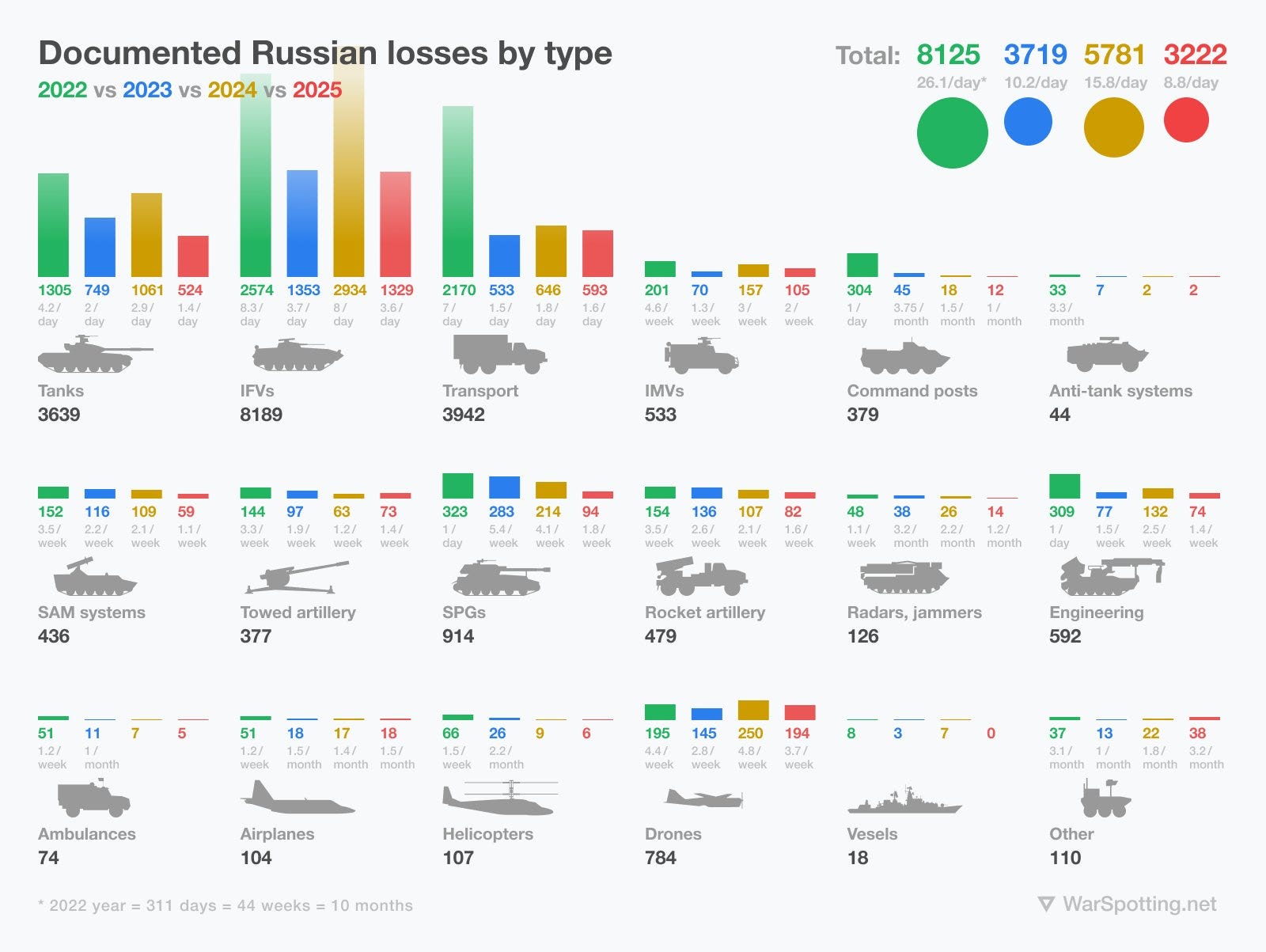
Eight vehicle losses a day for seven months through the end of 2025 marks the lowest sustained daily vehicle losses for the Russian military in 46 months. In 2024, the Russians lost 16 vehicles a day, on average. In 2023, they lost 10. In 2022, they lost a staggering 26 a day owing to their failed mechanized offensive toward Kyiv and Ukraine’s own successful counteroffensive in eastern Ukraine later that year.
Unthinkable prior to Russia’s wider war on Ukraine beginning in February 2022, the de-mechanization of the Russian armed forces is now complete. Large groups of armored vehicles make only infrequent appearances along the 1,100-km front line—and, when they do appear, usually get blasted to pieces by Ukrainian mines, drones, and artillery.
It’s not that the Russians don’t have more vehicles. To be sure, losses have been extreme. In total since February 2022, Russia has written off no fewer than 23,000 vehicles and other heavy equipment that the analysts at the Oryx collective have visually identified.
However, through a combination of new production and the reactivation of old vehicles from rapidly contracting Cold War stocks, Russia has made up for its equipment losses.
Yes, that means there’s no huge stock of stored vehicles to replenish battlefield losses in some future war. For now, however, the Russians still have many thousands of tanks, infantry fighting vehicles, armored personnel carriers, and armored tractors.
They’re just not using them very often or in large numbers. And for a good reason. Vehicles are easy targets for mines, drones and artillery.
Read the rest at Euromaidan Press.
Ukraine Is Losing In The South—And Ukrainian Commanders Are Blaming The Outnumbered Troops On The Ground

Days after capturing Huliaipole in Zaporizhzhia Oblast, the Russians are infiltrating neighboring Zaliznyczne