

This story was commissioned by Euromaidan Press. Since Substack pays only around a fifth of my bills, I have no choice but to take on a lot of freelance work. I still want my Substack audience to know where to read those freelance stories, however. Hence this excerpt.
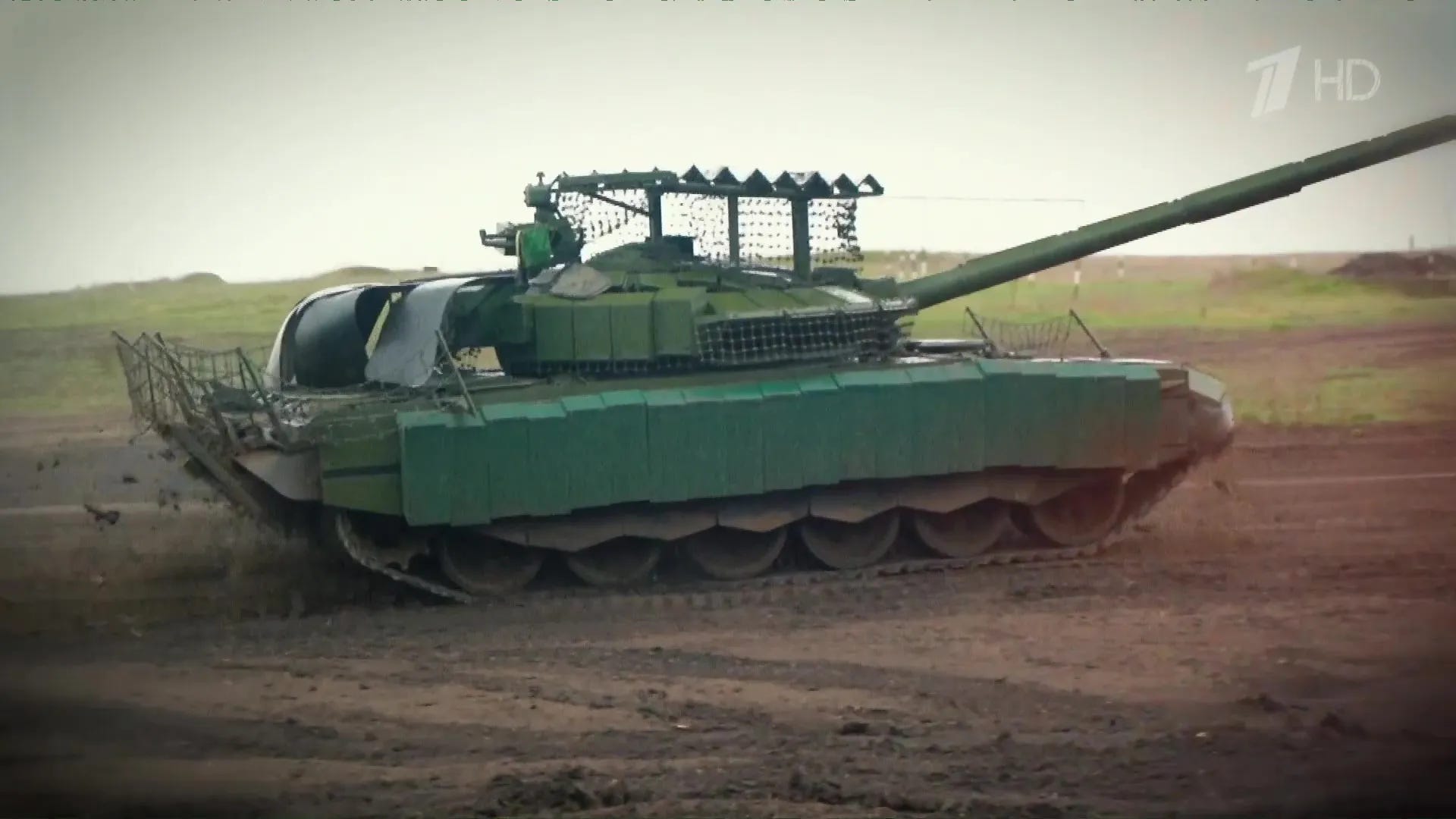
In 2024, as Russian tank losses in Ukraine exceeded 3,000—roughly as many tanks as the entire Russian ground forces had in active service on the eve of Russia’s wider war with Ukraine—Russian industry got creative.
Two years later, it has for more tanks than it needs. The big question is what it plans to do with them.
As 2023 ground into 2024, the Kremlin was determined to rebuild its armor stocks. But Russia’s only factory producing brand-new tanks, Uralvagonzavod in Nizhny Tagil, makes just 250 or so new T-90M tanks from scratch every year. Every other “new” tank that reaches a front-line regiment is built around an old hull left over from the Cold War. And stocks of Cold War-vintage tanks, while vast, are also finite.
Expecting to restore every single tank possible out of the roughly 7,200 tanks sitting in long-term storage, Russian factories assessed some of the oldest and rustiest stockpiled tanks, around 1,000 T-72As from the early 1970s, and concluded they’d need new engines.
Engineers got to work. And in September 2024, an industry representative told the State Duma’s Defense Committee that industry had launched a “new regeneration program” to install new parts in old 780-horsepower W-46 diesel engines powering the 45-ton, three-person T-72A. The new parts would transform “previously unrecoverable” W-46s into working engines after decades of disuse, the industry rep said.
Three months later in December 2024, the Russians doubled down.
Read the rest at Euromaidan Press.
Help Trench Art Grow To 700 Paid Subscribers

It took a year of hard work, but Trench Art just climbed past 600 paid subscribers! Celebrate with me and keep the momentum going with a 20% discount on paid subscriptions. Just $36 a year for daily war news and analysis.Thanks for reading Trench Art! This post is public so feel free to share it.