

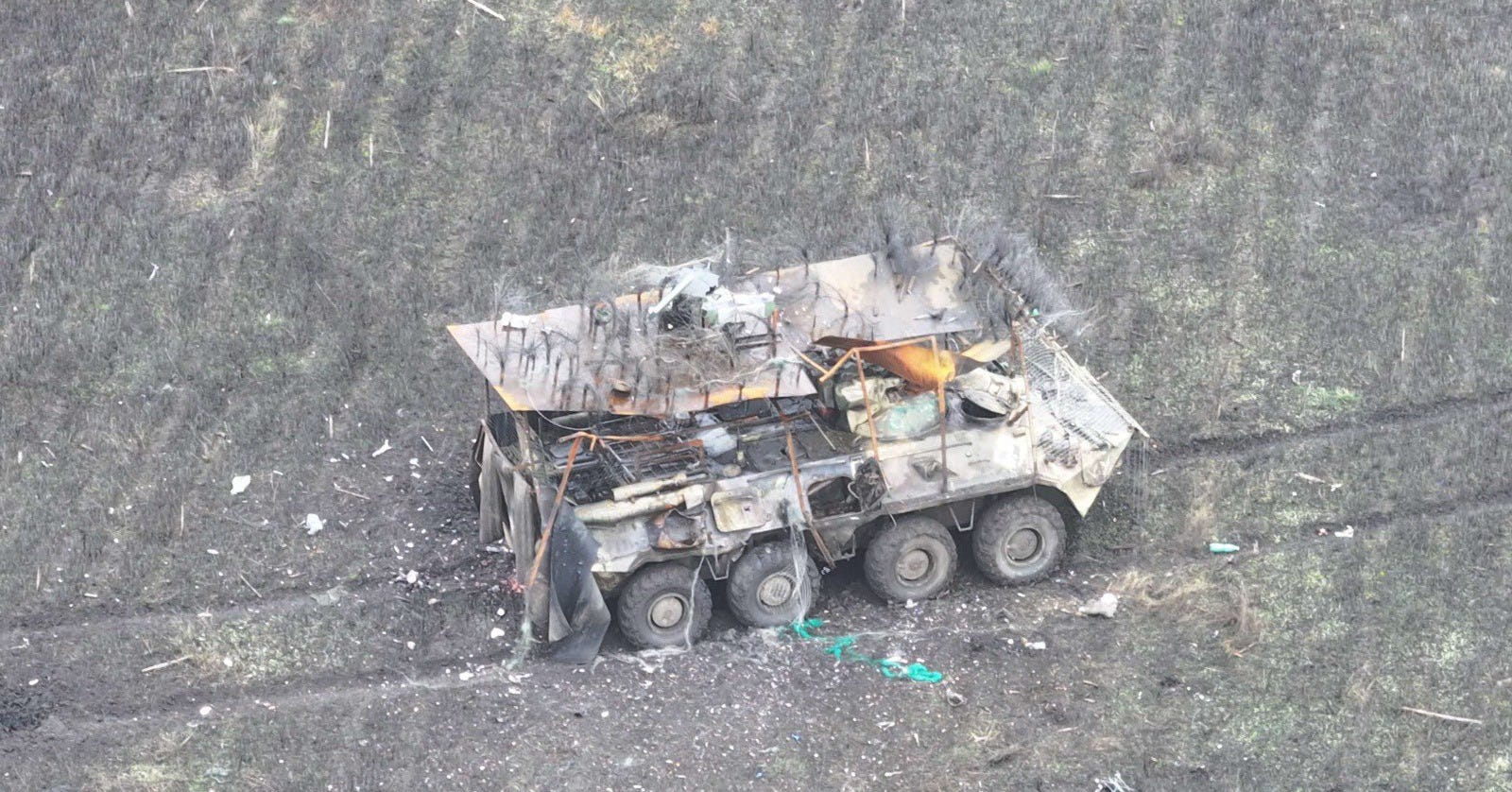
More Russian vehicles are getting anti-drone “hedgehog” armor
But the metal armor is heavy, so lighter vehicles can’t carry very much
Incomplete protection exposes vehicles to drone attack
If there’s a downside to the new hedgehog armor Russian troops are adding to their armored vehicles to block Ukraine’s drones, it’s that it’s heavy.
And that may be why the most recent vehicles to appear with aluminum “quills”—which can trigger incoming first-person-view drones before they explode on the vehicle’s hull—had just a few quills. The incomplete protection left the BTR-70M and BTR-82 wheeled infantry fighting vehicles vulnerable to drone attack.
Sometime in late November, Russian forces—potentially from the 1st or 252nd Motor Rifle Regiment—attacked Ukrainian positions, apparently north of Lyman in eastern Ukraine’s Donetsk Oblast. They rode across the drone-patrolled no-man’s-land in BTR-82s and BTR-70Ms.
The former are Russia’s latest wheeled IFVs. The latter, rarely seen in Ukraine, are older wheeled IFVs with extensive upgrades.
The Russians attacked under the cover of the thick fog that’s typical of Ukrainian winters, and which can ground and blind the FPV drones the Ukrainians count on for their first line of defense.
Ukrainian drone operators have ways of fighting through the fog, however: deploying drones with thermal cameras or A.I.-assisted targeting, or using ground robots or radio eavesdropping to locate targets for blind-flying drones.
One way or another, local Ukrainian forces detected the Russian BTR column.
It didn’t help the unfortunate Russians that they took a wrong turn. “Russians decided to attack and, fortunately, got lost a little bit,” Ukrainian drone operator “Kriegsforscher” quipped.
Drones took out two BTR-70Ms and a BTR-82. Kriegsforscher claimed his unit hit one of the vehicles and killed six Russians.
Read the rest at Euromaidan Press.
