

by DAVID AXE
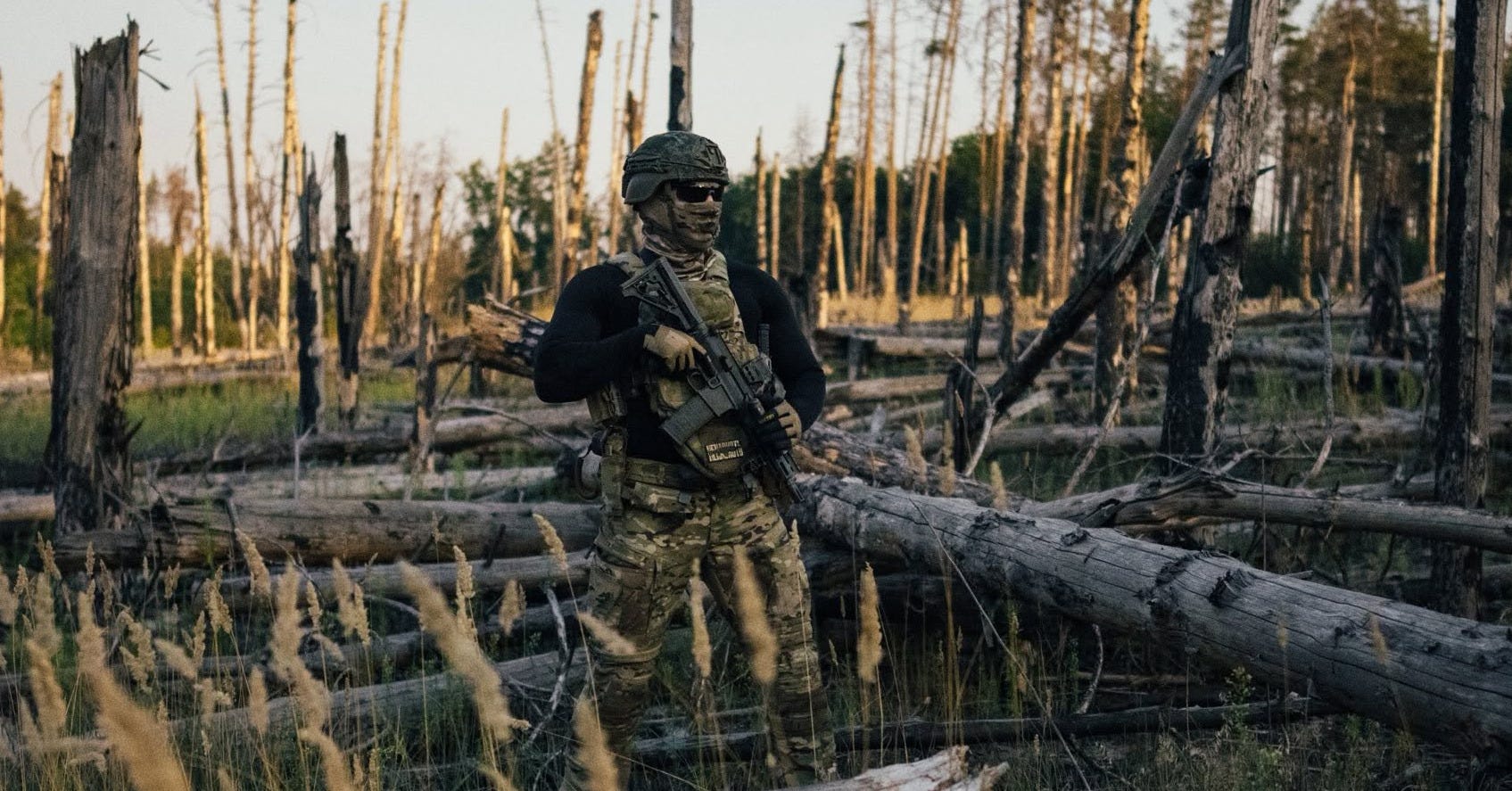
In May, under a veil of secrecy, the 3rd Ukrainian Army Corps counter-attacked in northern Donetsk Oblast, the focal point of the most intensive fighting in the blood-soaked Donbas region.
Exploiting weak points along the flanks of a pair of Russian field armies, which were advancing around the town of Lyman toward Sloviansk, the Ukrainian force under Brig. Gen. Andriy Biletsky marched through the village of Nove. Then it pushed south, cutting behind the Russian 20th and 25th Combined Arms Armies (each tens of thousands strong, at least on paper), so compelling them to retreat rather than risk encirclement.
By the time the 3rd Army Corps officially announced Operation Vivaldi in late September, its troops had liberated at least 176 sq. km. (68 sq. miles) of occupied land. And it was especially important territory.
By pushing the CAAs back across the Zherebets River, the 3rd Army Corps eliminated 18 months of Russian progress toward Sloviansk, one of the key fortress cities in the Donbas. In the worst case, the city’s defenders now have more time to prepare for the coming siege.
It didn’t happen quickly or easily. That it happened at all comes down to the 3rd Army Corps’ nearly airtight operational security, its aggressive adoption of aerial and ground robots for practically all conceivable roles, and an age-old truism of ground warfare: every rapid advance risks turning into defeat if the attacker overextends and exposes their flanks to counter-attack.
1. Secrecy still matters. While messaging is important in a war where national morale is a strategic resource, Biletsky and the 3rd Army Corps understood that if it was to succeed, it needed to develop quietly.
The reason is rooted in the tendency for face-saving Russian commanders to lie to their superiors about the real disposition of their forces on the battlefield. As a rule, a Russian colonel won’t admit his battalion is losing ground unless there’s undeniable public evidence his battalion is losing ground.
If the 3rd Army Corps could avoid providing that evidence, by not posting the customary lavish video montages of tactical wins, its leaders knew it would help the Russian commanders plausibly claim all was well, and that there was no need for Moscow to send more air support or reinforcements.
Read the rest at Europe’s Edge.
20% Off Paid Subscriptions!

Help keep Trench Art going by taking 20% off a paid subscription! That’s just $36 a year for daily war news and analysis.Trench Art is a reader-supported publication. To receive new posts and support my work, consider becoming a free or paid subscriber.