

Three weeks later, it’s possible to draw some important lessons that should inform Western armies as they plan for the next war. In short, drones give, and they take away; connectivity is everything; and attacking is extremely difficult under even the best circumstances.
Twin decisions wreaked havoc on Russian command and control early this month. At the behest of the Ukrainian government, billionaire Elon Musk’s Starlink bricked the thousands of smuggled and stolen satellite communication terminals Russian forces relied on to control their drones and coordinate between front-line troops and their distant headquarters.
At the same time, the Kremlin—apparently seeking to shut off alternative news and chat apps—cut off military access to popular social media, including the Telegram messaging app, which many Russian troops use to exchange key information along the front line.
The combined effect was to partially blind and mute many Russian drone teams, assault groups, and regimental headquarters. Wireless drones couldn’t fly. Assault groups no longer knew where they were going. Headquarters lost contact with forward units.
Swiftly organizing brigade-sized battlegroups, the Ukrainians went on the attack—especially in the southeast, where Dnipropetrovsk Oblast borders Zaporizhzhia Oblast. It was here, just east of the town of Pokrovs’ke, that Russia’s 36 Combined Arms Army and its four front-line regiments had been swiftly advancing as recently as December. (Ukrainian brigades and Russian regiments both have around 2,000 troops apiece, on paper.)
In three heady weeks, the Ukrainians pushed back the 36th CAA and cleared potentially hundreds of square kilometers of Russian troops. The final outcome of the southeastern counteroffensive is unsettled, but as of the time of this writing, the Ukrainians still had the momentum, and the Russians were still in disarray. It’s not too soon to draw some broad conclusions.
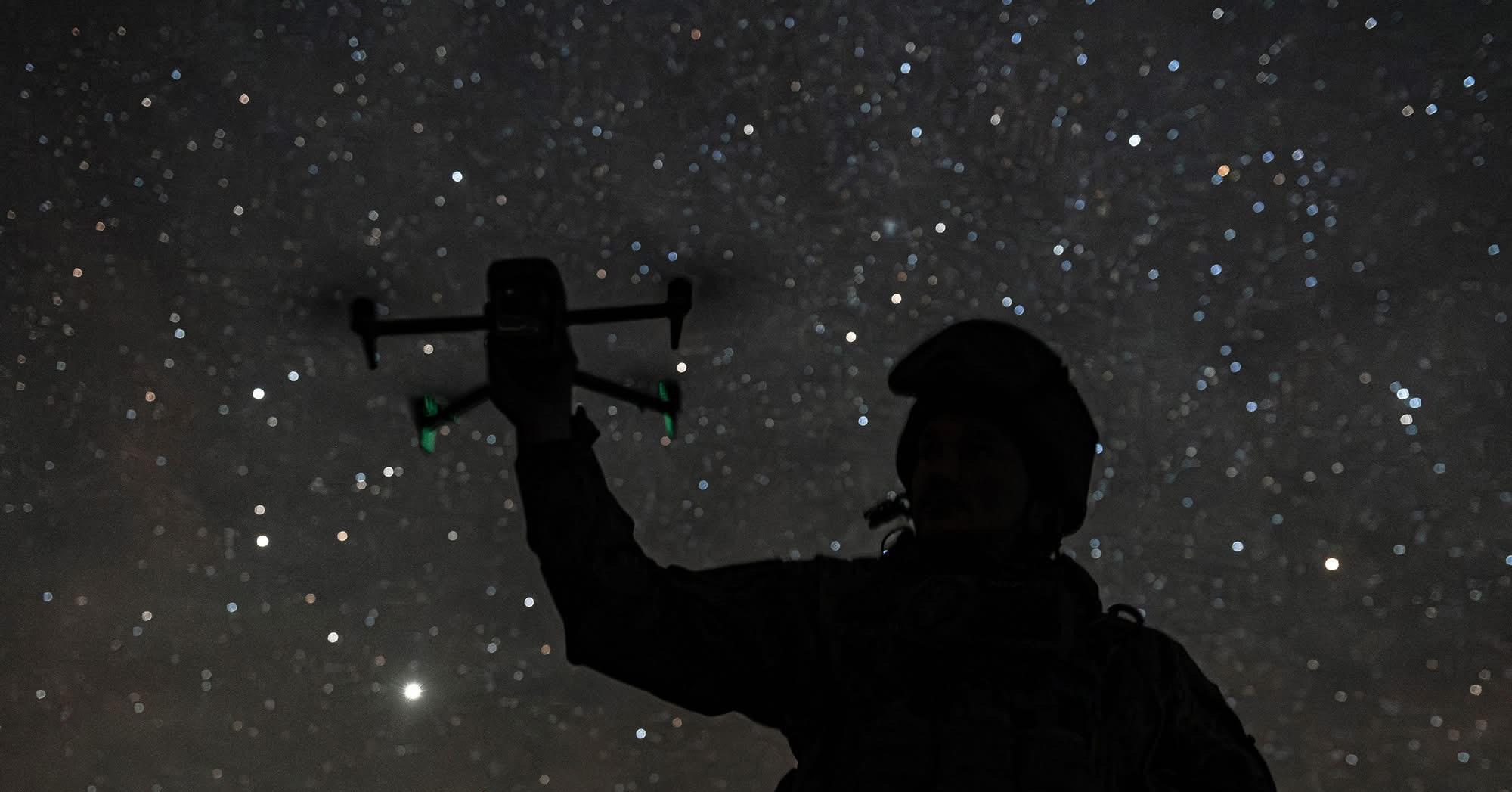
The proliferation of tiny explosive drones has tilted the balance of power on the battlefield toward the defender. It’s now extremely perilous for infantry and vehicles to break cover and attack across the drone-patrolled no-man’s-land.
The Russian force in Ukraine has managed to advance in the two years since Ukraine’s ill-conceived 2023 counteroffensive ground to a halt under relentless Russian bombardment and well-constructed fixed defensive lines. But the cost in manpower and heavy equipment has been staggering. The Russians have captured perhaps 1% of Ukraine while losing thousands of vehicles and suffering hundreds of thousands of casualties (most recent estimates suggest 1.2 million Russian casualties, with around 325,000 dead).
The problem with a drone-first defense is that, despite the spread of hardwired fiber-optic drones, most still need a solid radio signal, either beamed directly to and from the operator or bounced off a satellite. Lose the signal over a wide area, as happened when the Russian Starlinks went down, and your best defense becomes a liability. There may not be enough infantry to defend your positions when your drones can’t fly.
The Russians’ recent disarray is a reminder that no technology is a panacea. And every technological measure has a countermeasure.
Read the rest at Europe’s Edge.
Help Get Us To 600 Paid Subscriptions!

Help Trench Art reach its next major goal: 600 paid subscribers. Take 20% off an annual sub—and know that you helped keep this site going through 2026.Trench Art is a reader-supported publication. To receive new posts and support my work, consider becoming a free or paid subscriber.