

Whether and for how long Taiwanese troops can hold off a Chinese invasion force may depend on how much ammunition Taiwan has stockpiled for a potentially apocalyptic battle.
Taipei’s exact munitions stocks are a closely guarded secret, but there’s evidence that too few rounds are held for certain key weapon systems, which would quickly fall silent as Chinese troops stormed ashore and Chinese ships blockaded Taiwan’s ports.
Taiwan depends too heavily on foreign-made ammunition—supplies of which it may struggle to boost on short notice, especially if the United States doesn’t respond to a Chinese attack by immediately and forcefully intervening on Taiwan’s behalf.
It’s ominous that U.S. President Donald Trump’s 2026 National Defense Strategy doesn’t mention Taiwan even once and pledges ‘more limited’ support to allies it does mention. Taipei must plan for the worst.
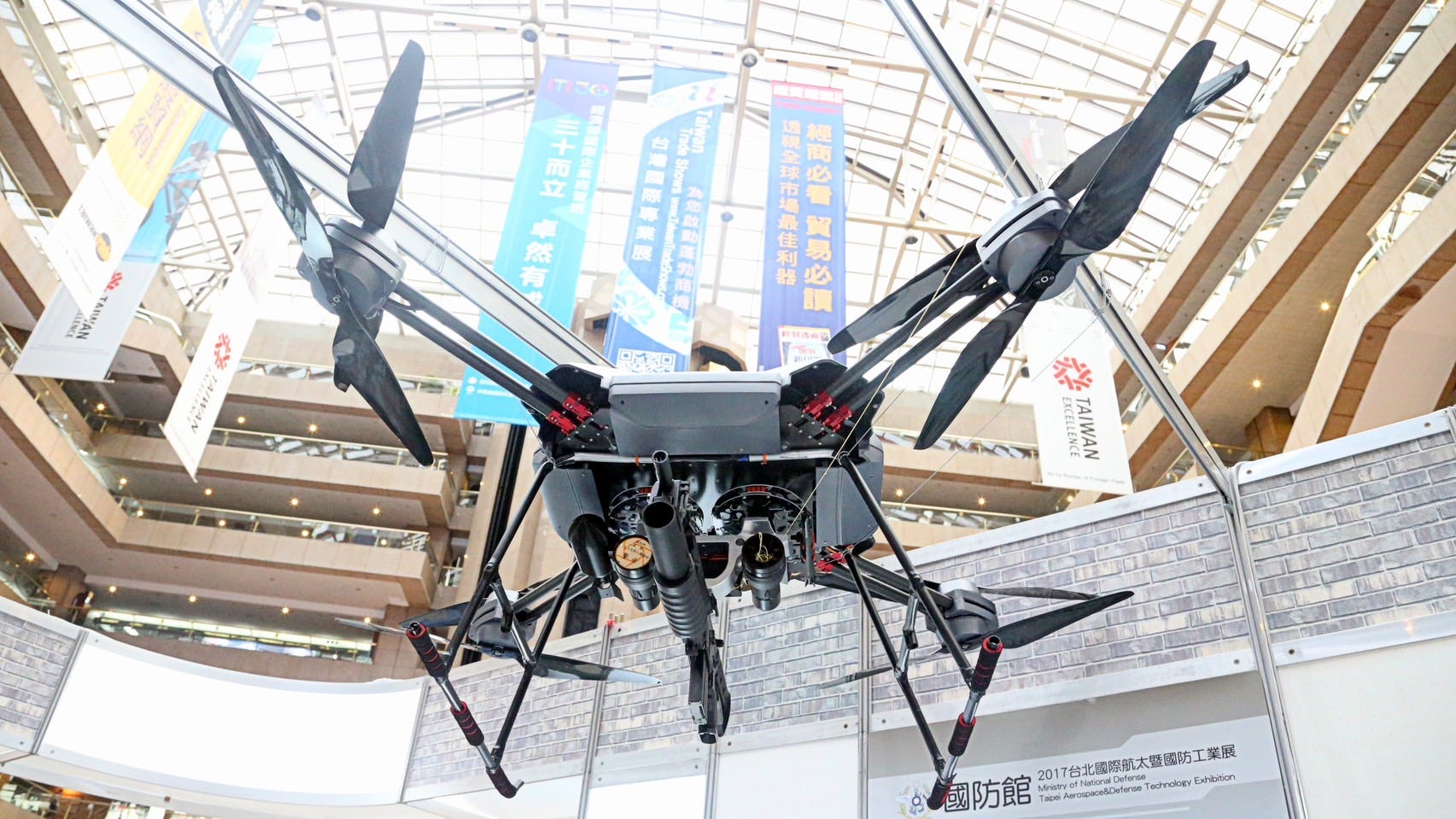
Fortunately for the Taiwanese, there’s a possible workaround for the ammo problem. Taiwan may be struggling to stash enough artillery rounds, but there’s nothing stopping it from stockpiling a new alternative: tiny explosive drones. Taiwan’s high-tech industry could produce these in huge numbers and without outside help.
These drones would be even more important in the alarming scenario where Taiwan fought alone—even if it only temporarily fought alone. But a pivot to drones should begin now.
‘The hard-won battlefield experience of Ukraine would suggest that massive munitions stockpiles are needed to sustain high-intensity operations,’ said Ian Easton, an associate professor at the U.S. Naval War College’s China Maritime Studies Institute. (Easton stressed that his views were his own and not those of the Naval War College or the U.S. military.)
Ukrainian and Russian artillery batteries are burning through millions of shells every year. Even the best-resourced armed forces in the world weren’t ready for such a rate of consumption. Before Russia widened its war on Ukraine in February 2022, the U.S. Army’s sole artillery shell factory produced just 14,000 155 mm shells a month. By 2024, the Russian army in Ukraine was firing more than 14,000 shells of similar calibers every two days, and the Ukrainians perhaps a third as many.
The U.S. has since boosted shell output to nearly 100,000 a month, but it took four years, billions of dollars in investment and great political will to get there. And the U.S. Army and Marine Corps are still years away from having enough shells in reserve to wage a sustained war on the scale of the war in Ukraine.
It’s not inconceivable that Taiwanese would need to fire as many artillery shells as the Ukrainians fire. The Taiwanese army’s roughly 2,100 big guns slightly outnumber the Ukrainian army’s own pre-war force of 1,800 big guns, after all. The Russians attacked with hundreds of thousands of troops; the Chinese probably would, too.