

This story was commissioned by Euromaidan Press. Since Substack pays only around a fifth of my bills, I have no choice but to take on a lot of freelance work. I still want my Substack audience to know where to read those freelance stories, however. Hence this excerpt.
On May 13 and 14, Russia battered Ukraine with more than 1,500 attack drones and missiles over roughly 30 hours—one of the biggest raids in the 51 months since Russia widened its war on Ukraine.
In Kyiv, a cruise missile collapsed a stairwell of a nine-story apartment block. Twenty-four people died.
Ukraine stopped most of it. In that heaviest overnight wave on May 14, 43 of 753 attack drones and six of 35 Kh-101 cruise missiles got past Ukrainian missiles, guns, interceptor drones and electronic warfare.
Ukraine already builds effective defenses against one-way attack drones. In particular, speedy interceptor drones that cost just a few thousand dollars apiece. And Ukrainian air force warplanes have proved they can intercept cruise missiles.
The ballistic missiles are the exception. Six of 18 Iskander-M and S-400 ballistic missiles got through, and all three Kinzhals. Against those, Ukraine has fewer than a dozen Patriot and SAMP/T batteries, and they are running out of interceptors.
The war in Iran has drained nearly half the U.S. Patriot stockpile. The intercept rate has slipped to around 25%. Kyiv has received 600 interceptors in four years. It says it needs 2,000 a year.
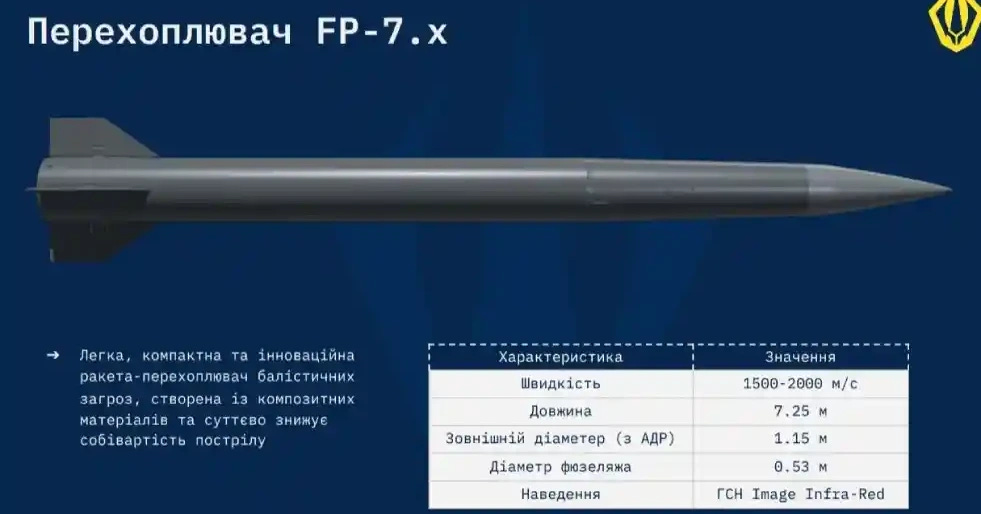
Determined to fill the air defense gap with a Ukrainian-made system, Kyiv munitions firm Fire Point is proposing to transform its FP-7 ballistic missile into an air defense missile under the auspices of the Freya initiative.
Read the rest at Euromaidan Press.
Help Trench Art Grow To 700 Paid Subscribers

It took a year of hard work, but Trench Art just climbed past 600 paid subscribers! Celebrate with me and keep the momentum going with a 20% discount on paid subscriptions. Just $36 a year for daily war news and analysis.Trench Art is a reader-supported publication. To receive new posts and support my…