

Russia’s improvised anti-drone armor is ugly, but it works. And now the Russians are taking steps to make these temporary upgrades permanent. That’s right: turtle, porcupine and hedgehog tanks are probably here to stay.
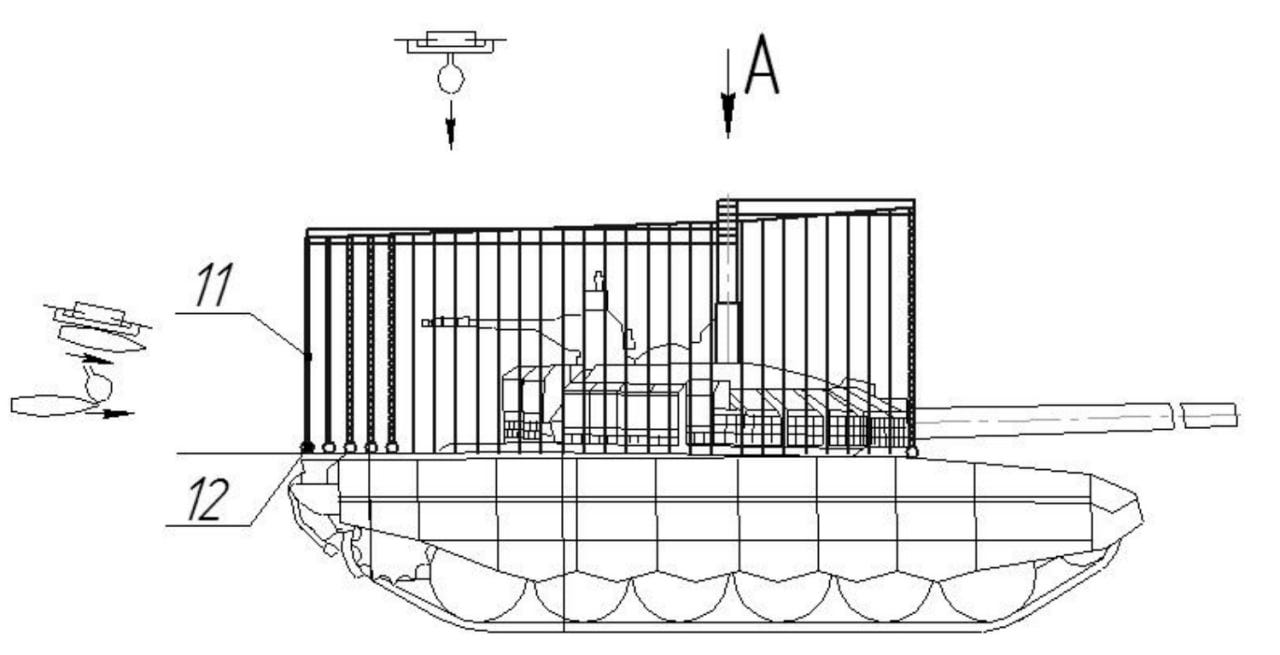
New blueprints for an add-on frame and screen point the way to standardized, mass-produced anti-drone protection. The design, reportedly developed by the Omsktransmash tank plant in Siberia—which produces new T-80s for the Russian armed forces—also addresses one of the bigger problems with field-installed anti-drone cages, screens and quills.
Namely, many of the do-it-yourself anti-drone applications prevent a tank from fully rotating its turret and aiming its main gun. The latest turtle tank bridgelayers—tanks wrapped in metal shells and carrying 15-foot assault bridges on front-mounted gantries—can’t use their main guns at all.
The Omsk design solves the problem of non-standardization. Some new T-90 tanks roll off the assembly line at Uralvagonzavod in the Urals with purpose-made anti-drone cages, but most Russian anti-drone armor is hastily applied in front-line workshops on the basis of whatever ideas and hard-earned experience the local engineers posses.
It’s messy and chaotic. And it’s how some engineers sometimes lose the plot—for instance, welding shipping containers atop some tanks in the hope the containers’ thin metal will block drones. As protection, a cage made of stronger metal would beat a shipping container any day.
The Omsk design solves the gun problem by adding what amounts to a hinge to the middle of the anti-drone screen. The crew can unpin the front half of the box-like metal installation and fold its sides backward, freeing the turret to rotate around half its axis.
