

by DAVID AXE
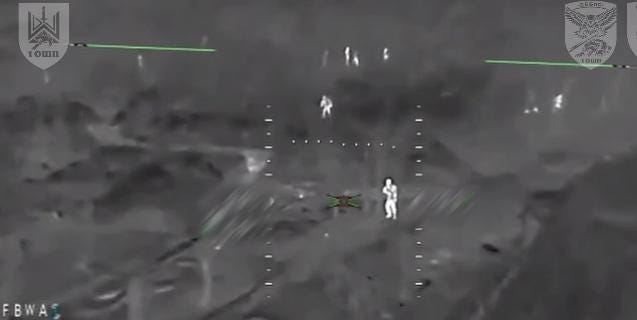
Every winter, Russian commanders in Ukraine eagerly await the fog. The thick mist that settles across eastern Ukraine on some winter days offers Russian ground forces some cover from the ever-present Ukrainian drones.
It’s a chance to advance across a disputed gray zone that, 57 months into Russia’s wider war on Ukraine, rarely budges by more than a few kilometers.
The winter of 2025 to 2026 gave the Russians a thick fog that helped the Russian Center Group of Forces to finally move significant mechanized forces into the front-line city of Pokrovsk, a major obstacle to the Russians’ march on their ultimate prize: the twin cities of Kramatorsk and Sloviansk, the last free cities in eastern Ukraine’s Donetsk Oblast.
What will the winter of 2026 to 2027 give the Russians? Now that they’ve captured the ruins of Pokrovsk and neighboring Myrnohrad, the Russians must motor around 20 miles north on one of several road routes to reach the outskirts of Kramatorsk.
That means eliminating Ukrainian resistance in at least one of the settlements sitting astride these routes: Druzhkivka, Hruz’ke or Dobropillia. As fog settled over the east on Nov. 13, the Russian Center Group of Forces mobilized—and made a go at Hruz’ke.
But the Ukrainians had planned for this day. They had the right drones at the ready.
