

by JOSEPH TREVITHICK
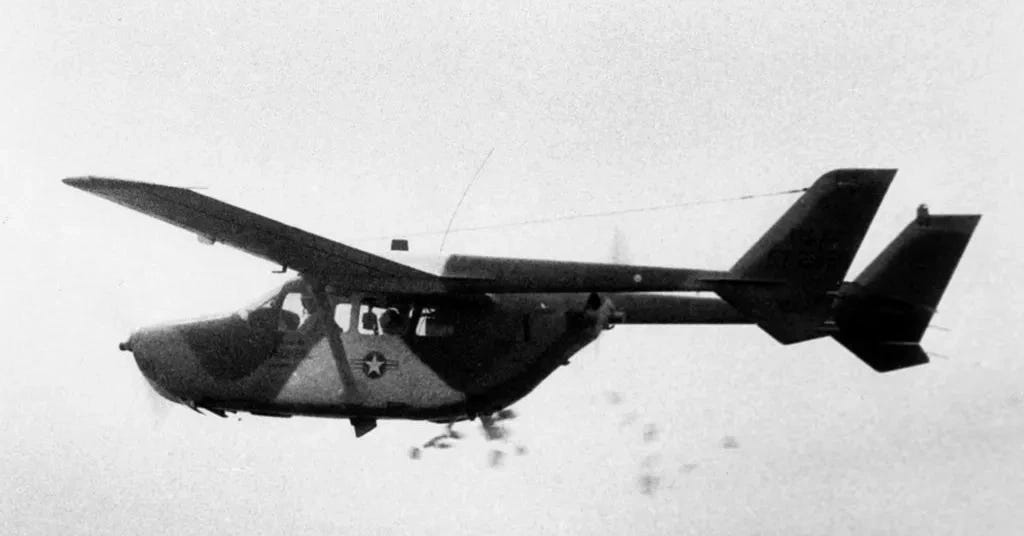
In 1967, the U.S. Air Force’s Special Operations Center at Eglin Air Force Base in Florida tested a “psychoacoustic weapon” that could be dropped from an airplane. Dubbed “Screeming Meemie,” the new weapon was a combination of loudspeaker and landmine—and was meant to perform “minute-by-minute harassment” of the enemy.
Screeming Meemie fulfilled a requirement for a new weapon that could blend conventional and psychological effects. The report on the 1967 test notes that regular bombs and guns could be “effective for demoralizing the enemy” but that the “destruction and harassment ceases when the aircraft leaves the target.”
On the other hand, existing psychological warfare tools like propaganda leaflets and airplanes with loudspeakers did not offer the possibility of “tangible destruction.”
With all this in mind, the Special Operations Center had started work on a new weapon in November 1966, eventually coming up with a rough prototype. The next year, the Hayes International Corporation submitted an unsolicited proposal to the Special Operations Center for a refined design.
Hayes had already been working with the Air Force on cluster bombs and likely heard about this requirement through the grapevine.
The company’s box-shaped Screaming Meemie consisted of five major components. The primary element was the siren, which generated what was described as a “warbling tone,” plus four loudspeakers—one for each side of the box.
The siren could be set to function continuously or intermittently. The battery could keep it running for 12 hours.
There was a self-destruct and booby-trap function. The 25-pound high-explosive charge would detonate if someone pushed the device over or tried to open it, or if the battery dropped below a certain level.
