

by JOSEPH TREVITHICK
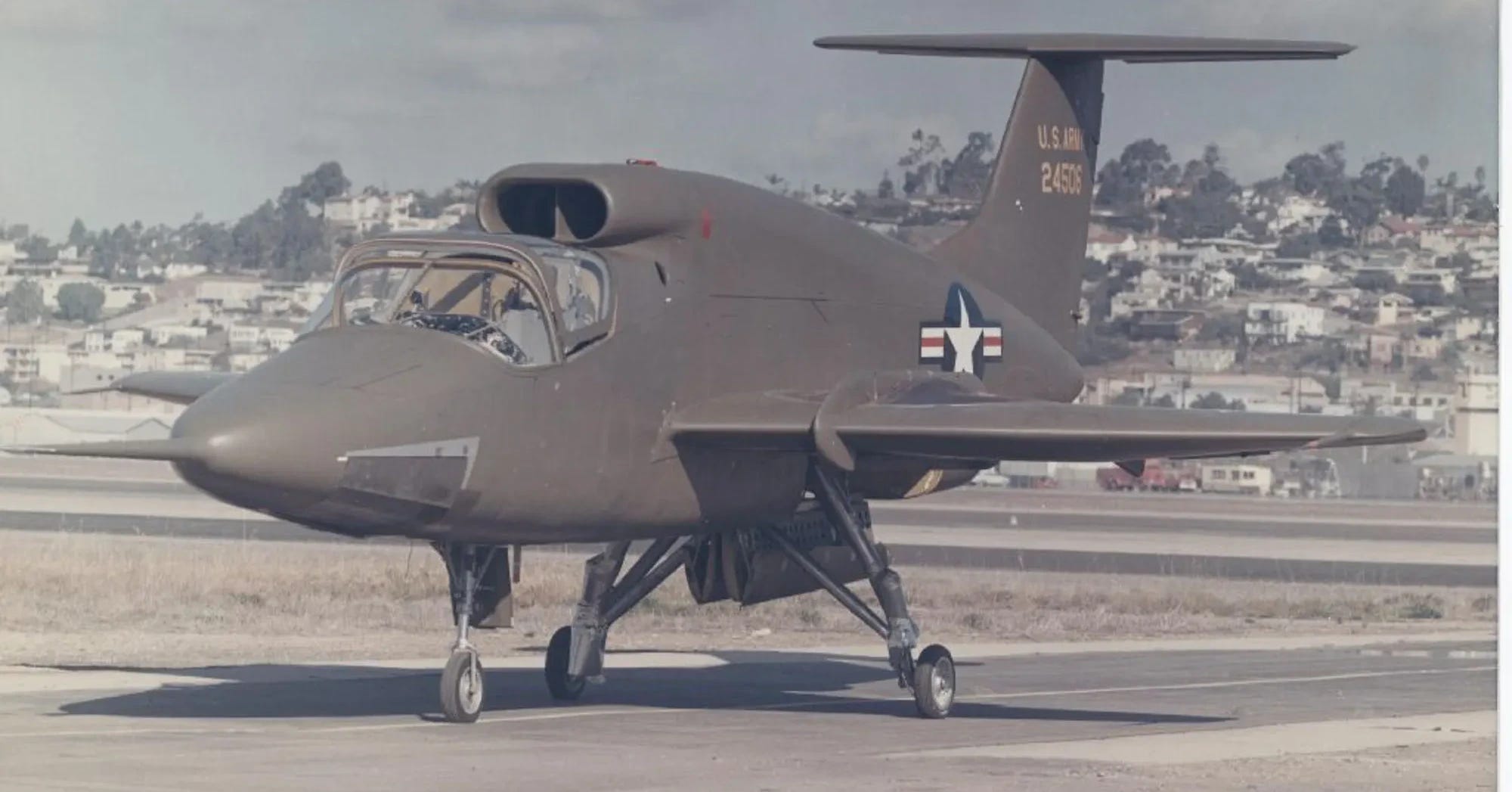
When one thinks of the U.S. Army, one generally doesn’t think of squadrons of jets flying around the battlefield. But at the height of the Cold War, the ground combat branch had its sights set on buying a fleet of jump jets.
Though the Pentagon turned the U.S. Air Force into a separate service shortly after World War II, its ground-pounding cousins remained interested in helicopters and other flying machines. A decade later, Army aviators were hard at work with aircraft makers to cook up special craft that could land and take off like helicopters, but fly like normal planes.
“While the 1947 National Security Act created an independent United States Air Force, this did not halt the expansion of Army organic aviation, or the Army’s increasing use of the helicopter,” Dr. Ian Horwood wrote in Interservice Rivalry and Airpower in the Vietnam War. “[But] in the early 1950s, such ‘convertiplanes’ appeared to offer more potential for Army surveillance and air mobility tasks than helicopters.”
In the end, the Air Force scuttled the plans—and buried decades of work.
By 1950, the idea of combining features from helicopters and traditional aircraft was hardly new. Spanish engineer Juan de la Cierva invented the autogyro, which blends a free-spinning rotor and a conventional forward- or rear-mounted engine, nearly three decades earlier.
As world settled into the Cold War, major air arms became fascinated by the idea a jump jet that wouldn’t necessarily need a long runway. During World War II, Allied forces bombarded Nazi Germany’s air bases and limited the Luftwaffe’s ability to fight back.
