

by DAVID AXE
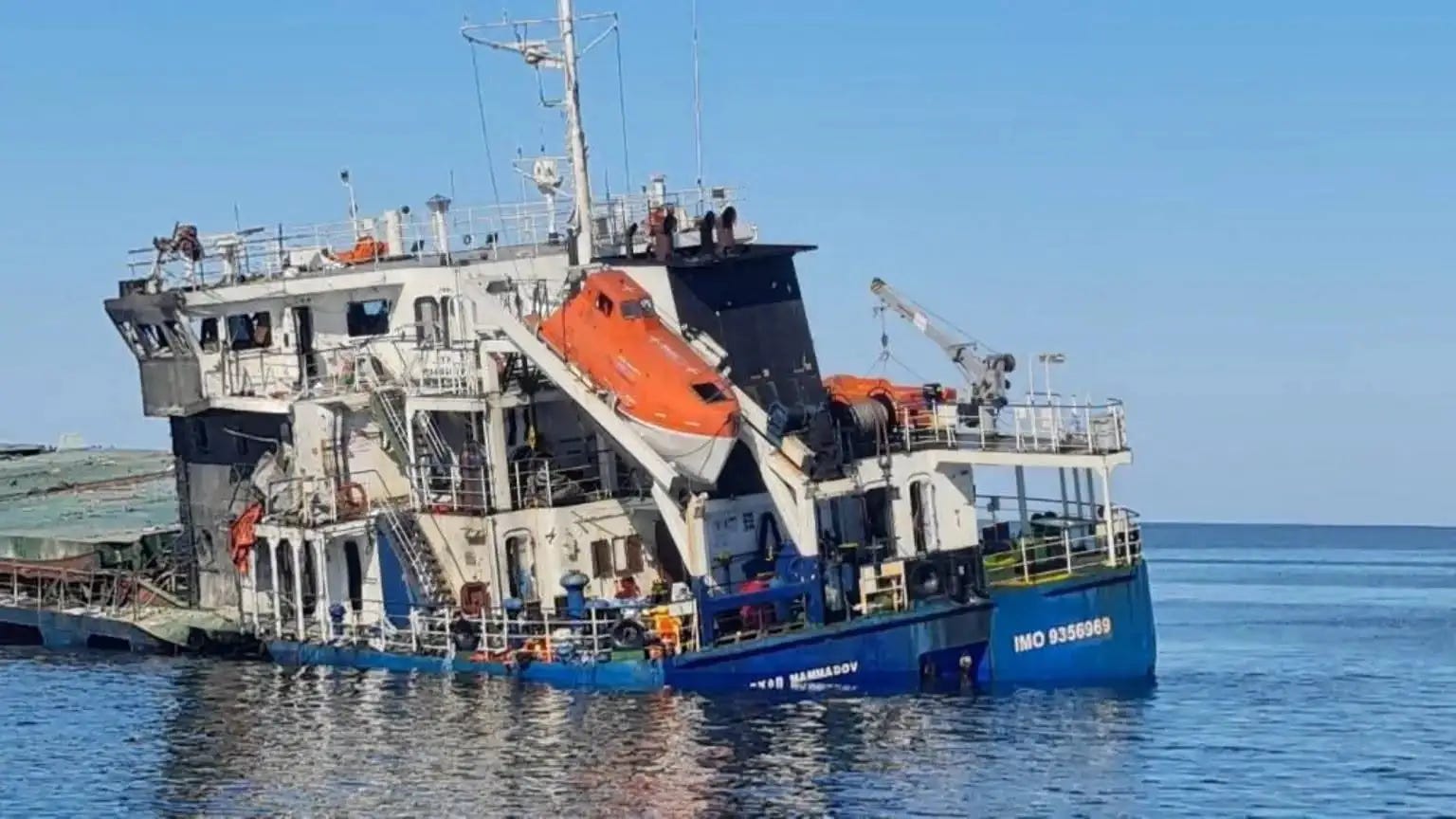
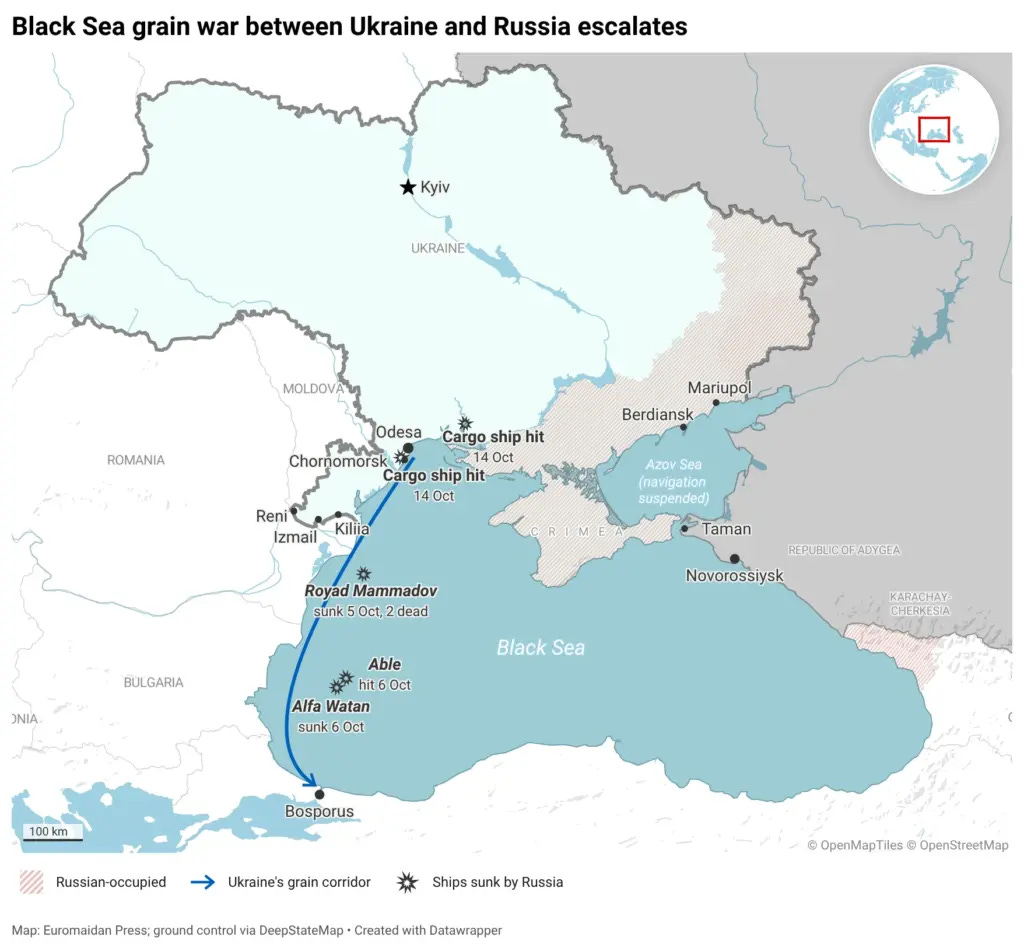
On or just before Wednesday, Oct. 14, Russian Geran-4 one-way attack drones struck two more cargo ships—one in the Buh River Estuary near Mykolaiv and another in Chornomorsk, 20 km south of Odesa.
They’re the latest strikes in competing Russian and Ukrainian countershipping campaigns that have, since this summer, throttled Black Sea grain exports.
The jet-propelled Geran-4s are Russia’s weapons of choice for these ship strikes. The drones haul warheads of up to 90 kg at up to 500 km/h and can fly more than 700 km. They already had A.I.-assisted targeting, and the Russians recently added terrain-matching navigation to make them less reliant on satellites and harder to jam with signal-scrambling electronic warfare.
For months, the Geran-4s and other Russian munitions have pummeled Ukrainian ports and the ships hauling grain from them. But Ukrainian forces were actually the first to escalate the shipping fight in an effort to squeeze Russian logistics.
As recently as early this summer, hundreds of Russian tankers and dry cargo ships plied the Black Sea and adjacent Sea of Azov, hauling fuel and bulk supplies between ports in Russia and Russian-occupied ports in southern Ukraine.
Most of the Russian vessels were unregistered and sailed without transponders, making them a kind of regional adjunct of Moscow’s “shadow fleet” that ships Russian oil and other goods to the global market in defiance of international sanctions.
Ukrainian drones had already hit ships hauling stolen Ukrainian grain out of occupied ports in June.
On July 6, Ukraine’s deep strike drone force finally started hunting the rest of the Russian ships. By day eight of the countershipping effort, the Ukrainians had hit 105 vessels. By day 12, drones including A.I.-assisted Fire Point FP-1/2s had struck 159, even a few tugboats sent to assist the damaged tankers.
Just a few days after Ukraine launched its countershipping campaign, Russia launched a retaliatory campaign targeting Ukraine’s Black Sea grain ports as well as the ships, many of them foreign-flagged, that haul grain through Türkiye’s Bosporus Strait out to the Mediterranean Sea and onward to foreign ports.
Soon, the Russian shadow fleet’s hundreds of ships were either drifting, disabled, or sheltering in Russian ports. On the other side of the Black Sea, Ukraine’s lucrative grain trade was in a state of collapse. Ports were under constant attack. International shippers were increasingly reluctant to send their vessels into the Black Sea.
Read the rest at Euromaidan Press.
20% Off Paid Subscriptions!

Help keep Trench Art going by taking 20% off a paid subscription! That’s just $36 a year for daily war news and analysis.Trench Art is a reader-supported publication. To receive new posts and support my work, consider becoming a free or paid subscriber.