

As U.S. and Israeli forces rained missiles and bombs on Iran on Feb. 28, the first night of a war that shows no sign of ending, Iran retaliated.
Iranian forces attacked several oil tankers passing through the narrow Strait of Hormuz. And a few days later, Iranian boats deployed sea mines in the 21-mile-wide chokepoint, through which around a quarter of the world’s oil and natural gas must pass.
Shippers halted almost all traffic through the strait, sending oil prices skyrocketing. It was an inflection point in a war whose aims U.S. leaders have struggled to define—and which revealed a serious gap in American naval capabilities.
Despite massing a powerful fleet for air and missile strikes on Iran, the U.S. Navy hesitated to re-open the Strait of Hormuz by force. Two months later, the Strait was still largely closed, and the Americans were still hesitating.
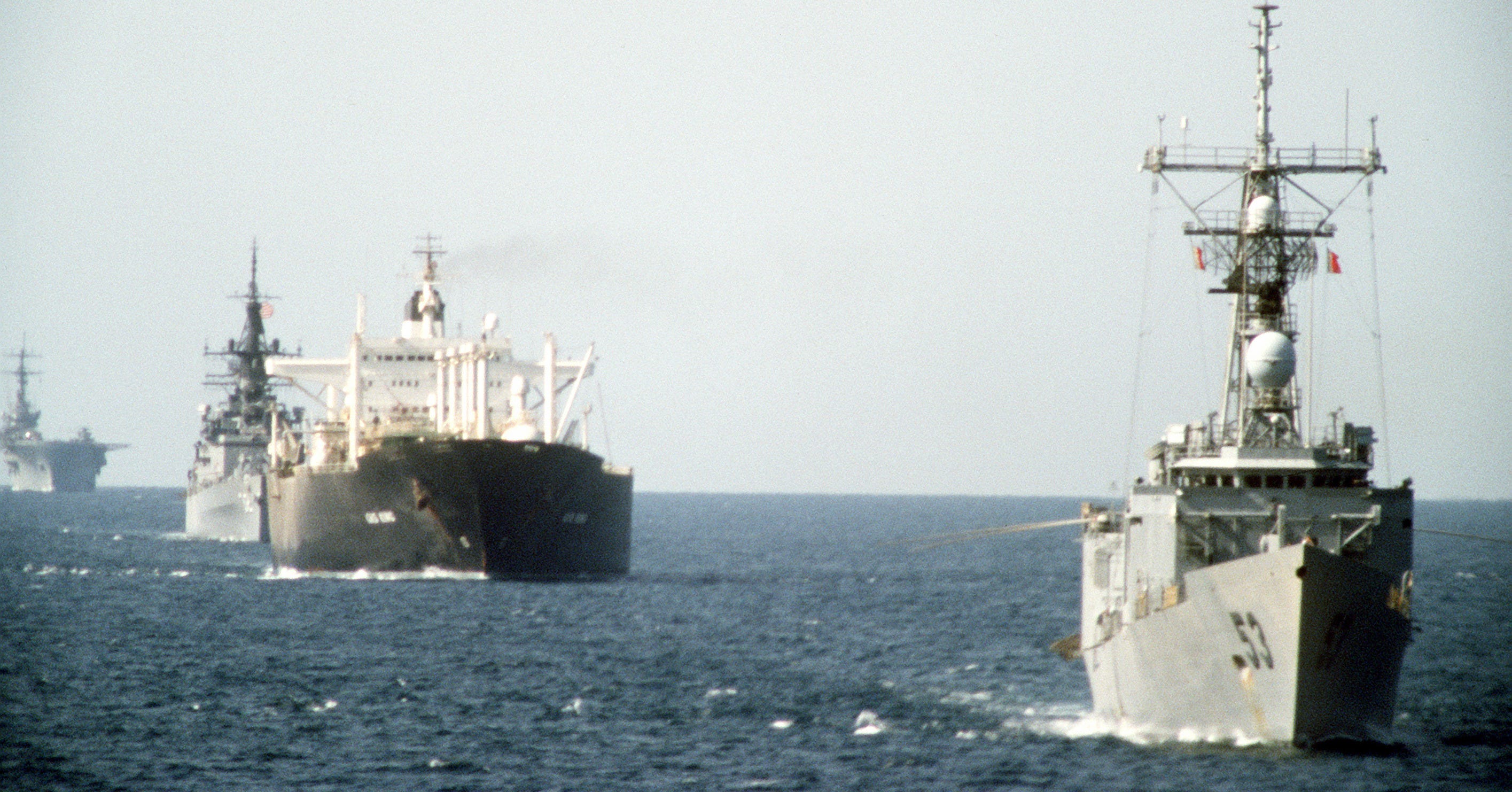
The Strait of Hormuz is extremely unfavorable terrain for American intervention. But geography isn’t the only problem. After decades of indecision and mismanagement, the U.S. Navy lacks the three things that would be most useful in any effort to force open the Strait with a close escort mission.
It lacks frigates, minesweepers and allies.
