

by DAVID AXE
Ukraine and the Netherlands will collaborate on an air defense project called “Bliksem,” Ukrainian Pres. Volodymyr Zelenskyy announced during his visit to the Netherlands on Wednesday.
Zelenskyy didn’t offer a lot of details. But if the Bliksem initiative he referenced on Wednesday is the same Bliksem initiative that a consortium of European companies launched this summer, then Ukraine could be in line to acquire one of the world’s most powerful missile interceptors.
But not quickly. Nor cheaply.
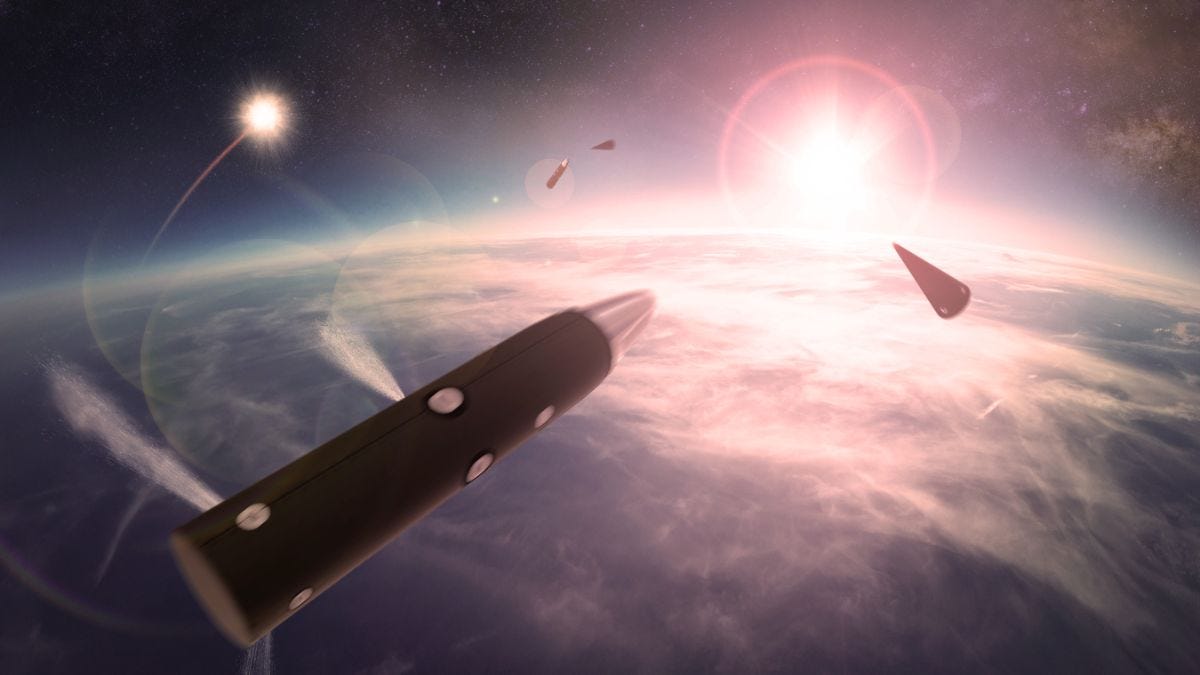
The pan-European Bliksem project aims to develop a so-called “exo-atmospheric” interceptor. That is, a missile that can fly higher than 100 km—above Earth’s atmosphere—in order to hit the most dangerous ballistic missiles during their mid-course phase of flight, before they tip back into the atmosphere and streak down toward their targets.
On Wednesday, Zelenskyy and Dutch Prime Minister Rob Jetten met with the heads of Dutch and Ukrainian companies in the defense, energy, and software sectors, Zelenskyy said. “We defined key priorities and decisions that can strengthen our practical economic cooperation: defense production, joint technology and energy projects, industrial development, and, very importantly, satellite technologies and air defense,” Zelenskyy said.
“Our teams have been tasked with working out a specific air defense project, Bliksem,” Zelenskyy continued. “We have already started this work.”
If the Dutch-Ukrainian Bliksem is the same as the wider European Bliksem, then it’s an effort to develop a missile in the class of the American Terminal High Altitude Area Defense (THAAD) and Standard Missile-3 (SM-3), as well as the U.S.-Israeli Arrow 3. All three are exo-atmospheric.
Cued by radars and satellites and boosted 100 km into the sky, they punch right through the hazy Kármán line that delineates the border between the atmosphere and space.
Up there in the cold vacuum, the interceptors can see clearly with sensitive infrared seekers—and distinguish incoming ballistic missiles from any decoys the missiles may deploy. Thrusters maneuver the interceptors to directly impact incoming missiles, destroying them with kinetic energy rather than explosive warheads.
Read the rest at Euromaidan Press.
20% Off Paid Subscriptions!

Help keep Trench Art going by taking 20% off a paid subscription! That’s just $36 a year for daily war news and analysis.Thanks for reading Trench Art! This post is public so feel free to share it.