

by DAVID AXE
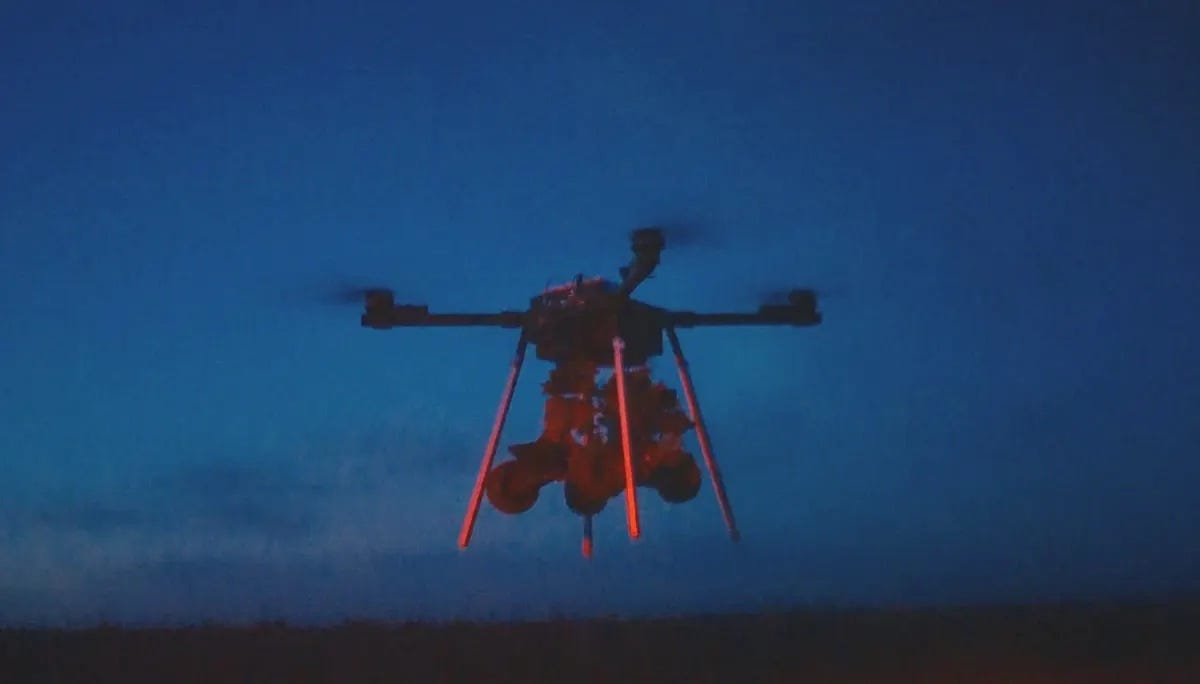
Back in July, Russian sources circulated footage from the front line in Ukraine—shot by Russian forces—depicting a Ukrainian heavy bomber drone airlifting an unmanned ground vehicle into action.
It was apparently the first ever all-robot air assault. And now we finally know when, where and why it happened. The unmanned vertical envelopment was part of the Ukrainian 3rd Army Corps’ secretive Operation Vivaldi, a months-long counteroffensive that liberated around 34 square miles of eastern Ukraine’s Donetsk Oblast and pushed a pair of Russian field armies away from the front-line town of Lyman and back across a key terrain feature: the Zherebets River.
Between March and October, Operation Vivaldi erased 18 months of Russian gains in northern Donetsk and took the pressure off Sloviansk and Kramatorsk, the last two big free cities in Donetsk. The cities are still vulnerable to a Russian advance from the south. But from the north, they’re more secure than they’ve been since early 2025.
It was an incredible feat by an outnumbered and outgunned Ukrainian force that leveraged every tactical and technological advantage it possessed to pull off the seemingly impossible. It counterattacked a much larger, dug-in enemy force, inflicted heavy casualties on the defender and ejected it from positions it had held for more than a year.
Ukrainian air power, both manned and unmanned, played a critical role. For months ahead of the first ground maneuvers along the flanks of the Russian 20th and 25th Combined Arms Armies, the Ukrainian air force sortied manned fighters and attack aircraft for interdiction strikes behind the forward edge of battle.
