

This story was commissioned by Euromaidan Press. Since Substack pays only around a fifth of my bills, I have no choice but to take on a lot of freelance work. I still want my Substack audience to know where to read those freelance stories, however. Hence this excerpt.
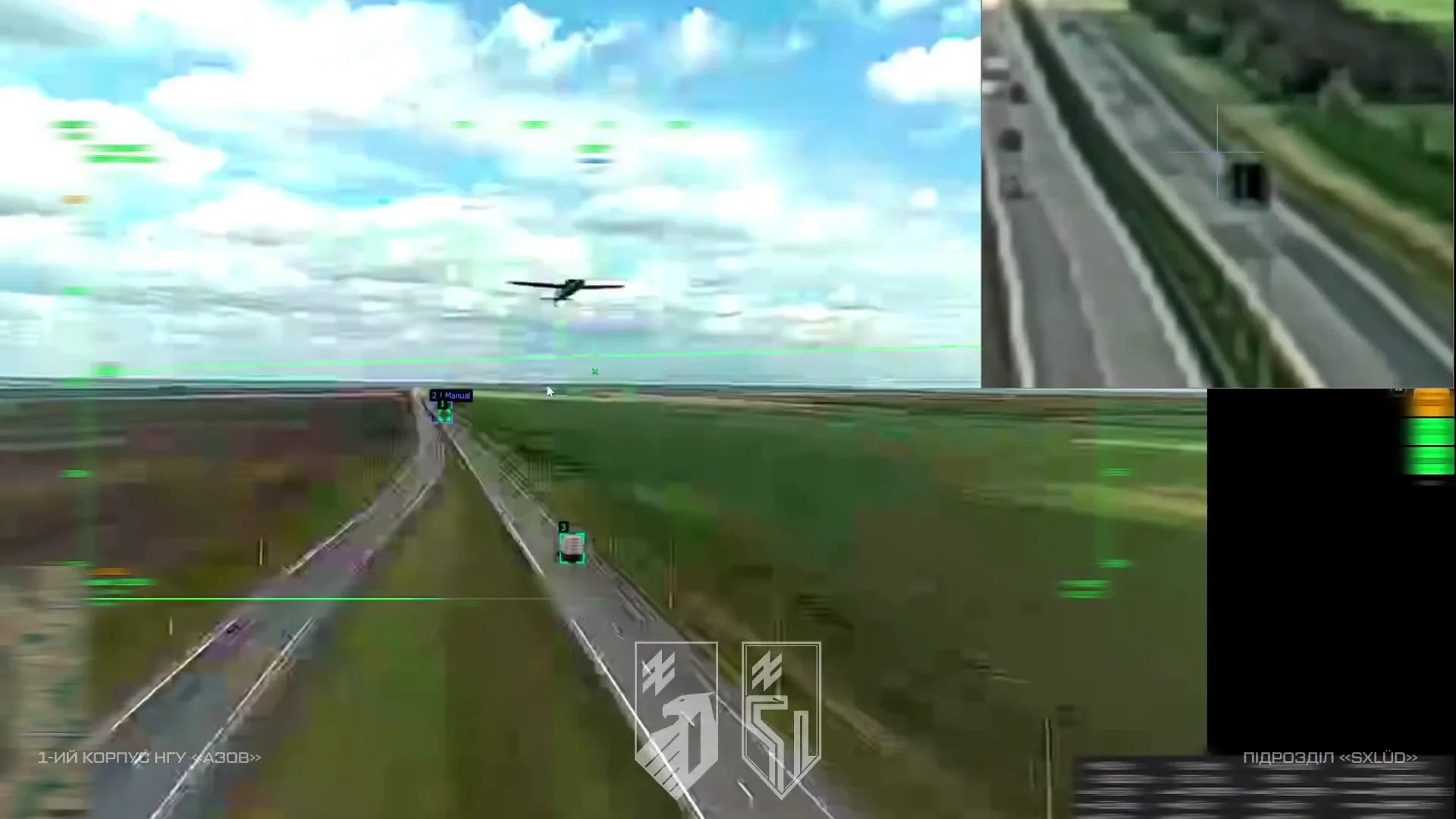
We don’t know how many Hornet one-way attack drones U.S. firm Swift Beat has manufactured for Ukraine. But there are so many of the approximately 2-meter-wingspan drones that they occasionally cross paths with each other as they hunt.
At least two of the drone meet-ups, one propeller-driven Hornet capturing another Hornet on its forward-looking camera, are captured in a new montage of drone strikes posted by the Ukrainian National Guard’s 1st Azov Corps.
The crowded skies are the point. Ukrainian drone units are striking Russian supply trucks, depots and rear-area infrastructure deeper and more often than ever before—and the front-line regiments those trucks were meant to supply are arriving short on fuel, ammunition and people. When they arrive at all.
Also captured in the montage: a series of Hornet strikes on Russian trucks. This spring, Ukrainian drone forces dramatically escalated their strikes on the Russian logistical zone stretching a couple of hundred kilometers from the disputed gray zone.
The number of these mid-range strikes more than doubled between February and March to a new high of no fewer than 288 strikes, according to analysis group Tochnyi. That’s 288 raids targeting Russian supply depots; the trucks, vans and trains that haul supplies; the electrical grid powering the rear-area logistical system; and the air defenses protecting all of the above.
The pace of mid-range drone strikes is only increasing. Tochnyi observed 99 mid-range strikes in just the first 10 days of April. Blowing up more of the Russians’ supplies and reinforcements as they’re en route to front-line regiments, Ukrainian drone units are weakening those regiments before they can even begin an assault across the gray zone.
For the Russians, “just reaching the front line (which is the prerequisite for an assault) has become very risky,” French mapper and analyst Clément Molin noted. The intensifying attacks on Russian logistics may explain why Russia’s traditional spring offensive is off to such an unimpressive start this year.
Read the rest at Euromaidan Press.
Help Trench Art Grow To 700 Paid Subscribers

It took a year of hard work, but Trench Art just climbed past 600 paid subscribers! Celebrate with me and keep the momentum going with a 20% discount on paid subscriptions. Just $36 a year for daily war news and analysis.Trench Art is a reader-supported publication. To receive new posts and support my…