

This story was commissioned by Euromaidan Press. Since Substack pays only around a fifth of my bills, I have no choice but to take on a lot of freelance work. I still want my Substack audience to know where to read those freelance stories, however. Hence this excerpt.
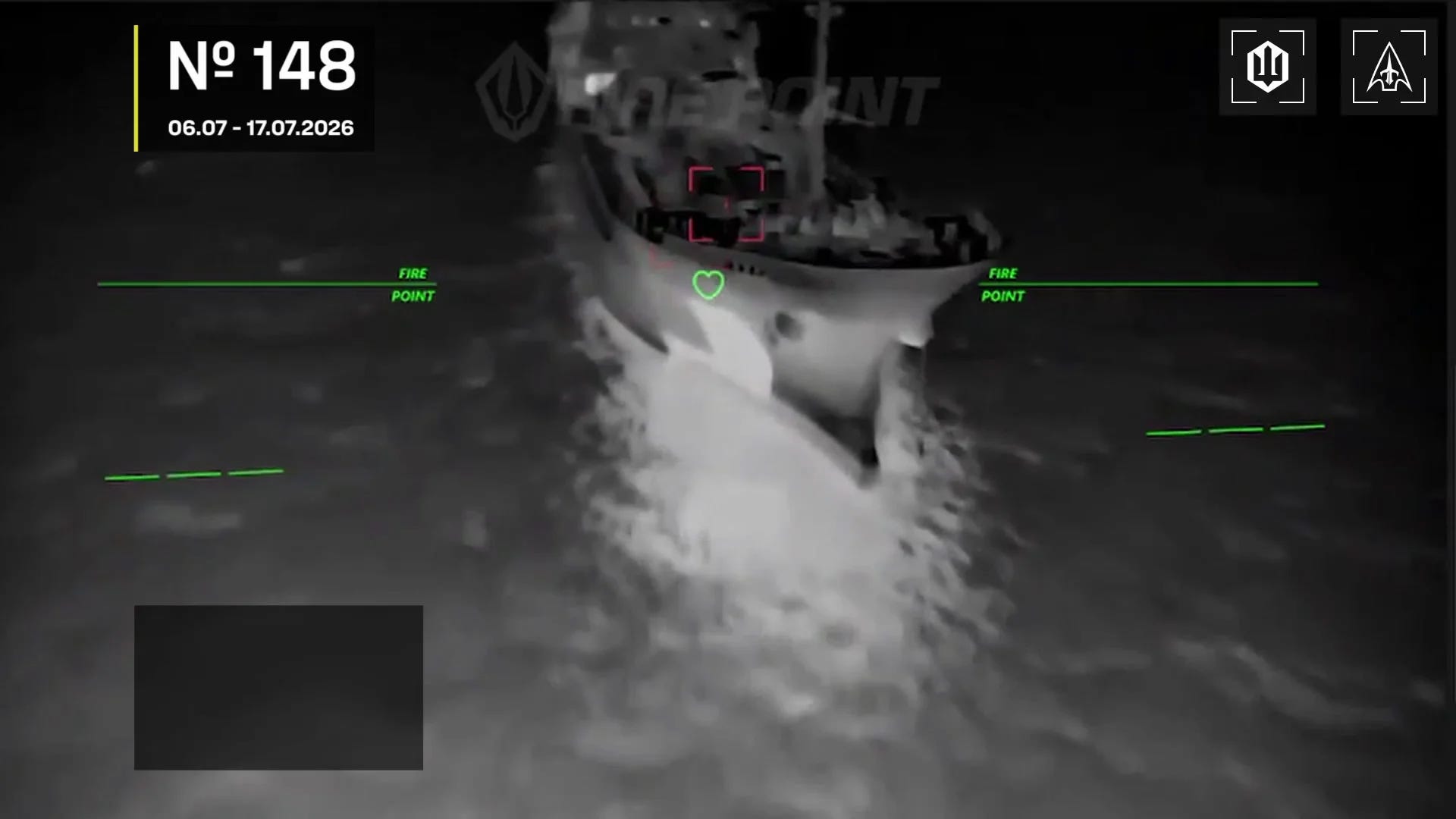
Ukraine’s drone force is walking a fine line as it escalates its attacks on Russia’s unregistered commercial “shadow fleet” in the Sea of Azov and eastern Black Sea. The drone operators are trying to immobilize the ships without breaching their hulls and spilling fuel or crude oil into the water.
That fleet is a big piece of how Moscow keeps its war funded—the aging tankers move Russian oil around Western sanctions—which is why Ukraine’s drones have spent the past two weeks hunting it across the Azov and Black seas at better than a dozen ships a day.
“The goal is not to pollute the sea with oil spills; therefore, there must be no hull breaches,” wrote Robert Brovdi, commander of Ukraine’s independent Unmanned Systems Forces.
Instead, Brovdi stressed, the objective is “irreversible paralysis of oil, fuel and cargo logistics operating around sanctions. Turn every self-propelled vessel into a drifting barge, blind and deaf.”
To immobilize a ship without breaching its hull requires accuracy: the drone must strike the ship’s superstructure or screws, and only its superstructure or screws. Hitting a ship, but hitting it along its biggest part—its hull—risks polluting the already fragile Black Sea ecosystem.
Read the rest at Euromaidan Press.
Independence Day Discount!

Happy 250th birthday to a troubled young country with a rich history and lot of potential. Celebrate July 4th with 25% off an annual subscription to Trench Art, your best source for war news and analysis.Thanks for reading Trench Art! This post is public so feel free to share it.