

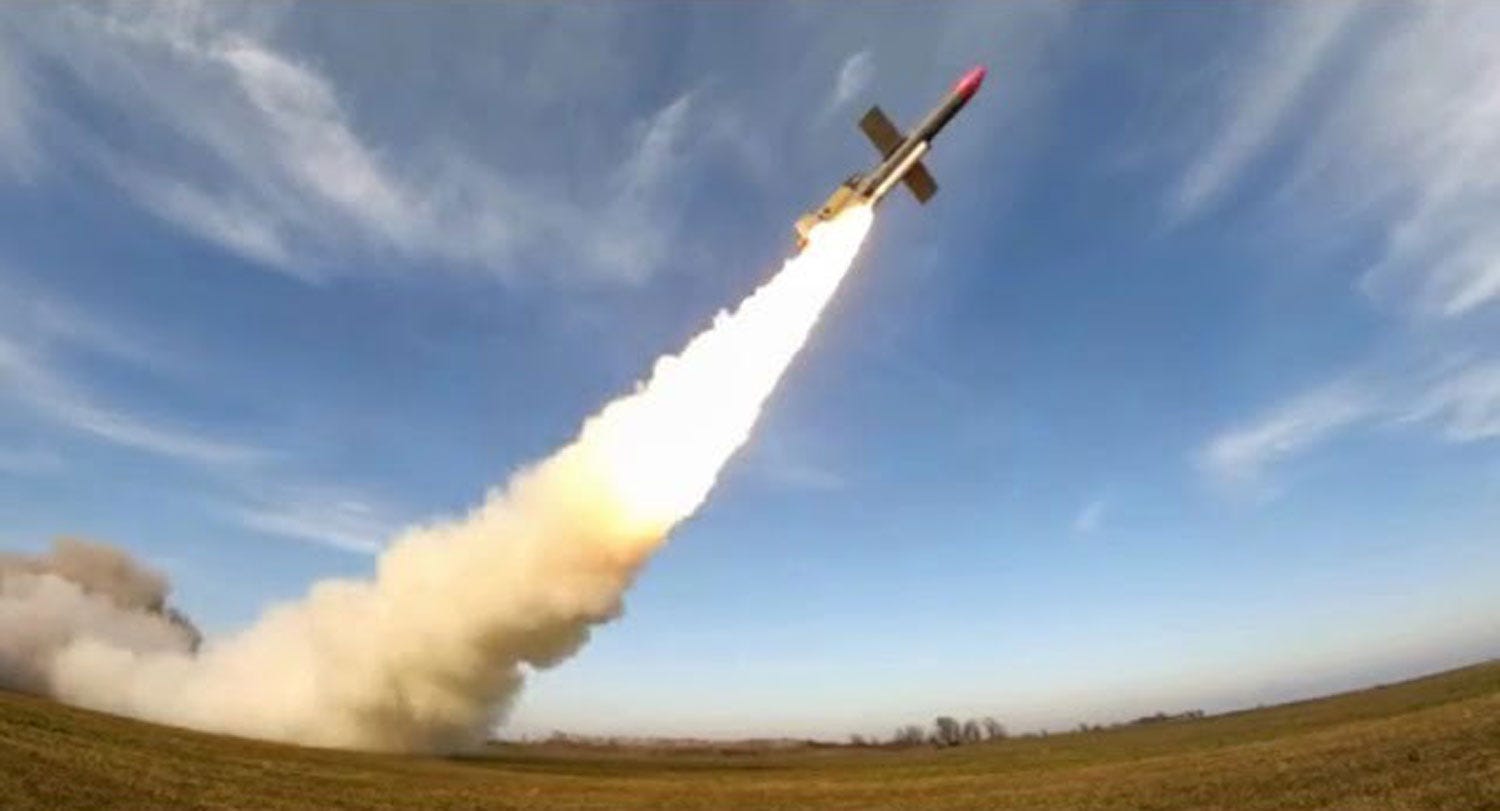
Missile-maker Fire Point promised the Flamingo would add heft and reach to Ukraine’s deep strikes, but production has been slow to ramp up
After months of disappointment, Ukraine may finally have gotten some real results from its giant Flamingo cruise missile
A 20 February Flamingo raid may have inflicted major damage on a Russian missile factory in Votkinsk
The attack could cause a ripple of delays in Russian missile production
Ukraine has finally put its giant Fire Point FP-5 Flamingo cruise missiles to good use. On the night of Feb. 20, at least one of the six-ton Flamingos blasted a hole in the roof of a missile workshop in Votkinsk, in western Russia 1,400 km from the front line.
The strike, which came six months after Ukrainian firm Fire Point dramatically revealed the jet-propelled, largely fiberglass Flamingo to reporters, may have significantly damaged the Votkinsk missile plant. Votkinsk apparently produces components for many of Russia’s most powerful missiles, including the Oreshnik, Kinzhal, and Iskander-M.
The February strike is a possible win for Fire Point as critics question the company’s early claims regarding the Flamingo. More importantly, it’s a win for Ukraine as it struggles to blunt Russia’s relentless campaign of drone and missile strikes targeting Ukrainian cities and power plants. The missiles Votkinsk helps produce have inflicted widespread damage in Ukraine.
The Flamingo’s developers face deep skepticism. Last fall, Fire Point insisted it would massively scale up production of the FP-5 and quickly boost annual output to more than 2,000 missiles. But in the nine months since the first secretive combat trials of the ramp-launched FP-5, the Ukrainians have fired only about 16 missiles in seven raids, resulting in just four damaging hits.
