

This story was commissioned by Euromaidan Press. Since Substack pays only around a fifth of my bills, I have no choice but to take on a lot of freelance work. I still want my Substack audience to know where to read those freelance stories, however. Hence this excerpt.
Ukrainian drone-maker Skyfall has upgraded its iconic Vampire bomber drone to fly right through Russian electronic warfare. Now the hexacopters can attack the jammers themselves.
That matters now because the jammers are some of the last things standing between Ukraine’s drones and the Russian air defenses they hunt. Ukrainian forces have destroyed more Russian air defense systems this spring than at any point in the war—81 confirmed since March 1.
A drone that shrugs off jamming can go after the jammers that were protecting everything else. Kill the jammer, and the next target gets easier.
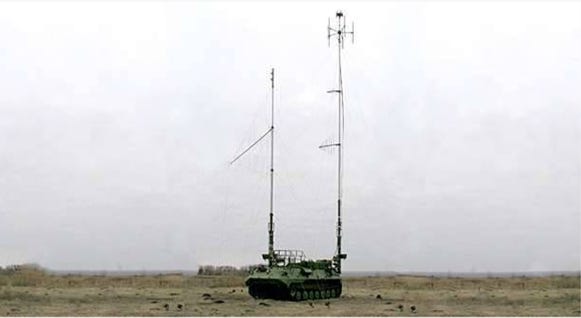
Following the upgrades, a Vampire recently found and bombed a rare Russian Borisoglebsk-2 tracked jamming vehicle, likely destroying it with several grenades that punched right through the Borisoglebsk-2’s thin top armor.
A complete Borisoglebsk-2 complex is estimated to cost tens of millions of dollars. Russia has built only a few dozen of them since 2015, and Ukrainian forces have knocked out at least six since 2023. “I think this is the most painful operation carried out against the Russians in a single instance,” a Skyfall spokesperson said, only somewhat exaggerating.
Read the rest at Euromaidan Press.
Help Trench Art Grow To 700 Paid Subscribers

It took a year of hard work, but Trench Art just climbed past 600 paid subscribers! Celebrate with me and keep the momentum going with a 20% discount on paid subscriptions. Just $36 a year for daily war news and analysis.Trench Art is a reader-supported publication. To receive new posts and support my work, co…
One of the notable advances of the last year has been fast little quadcopter drone interceptors. The Russians are now making them too. They rely on ground based radar, so like the EW installations, they are putting out electromagnetic waves that can be triangulated to a target identification. If you could take down Russian jamming defenses and interceptor capabilities in an area for a day, and used your own interceptors to clear the sky of Russian reconnaissance drones, you could do what you wanted on the ground.
Using terrain matching to figure out a flight path is an interesting old-is-new approach?
IIRC, some pre-GPS cruise missiles used it in addition to inertial navigation gyroscopes? Ditto the Panavia Tornado in the early 1980s? For the latter, it was a matter of survival, since it was designed to fly just above treetop level at Mach 2. Terrain following radar only goes so far, you better have a good idea of what to expect along the route also - ie high voltage power lines, for example.
GPS was revolutionary, now militaries have to learn how to live without it while fighting (near-) peers. Thankfully, the insanely intricate mechanical gyroscope systems of the 1970s have been replaced by solid state systems. Much lighter, easier to maintain, and cheaper.