

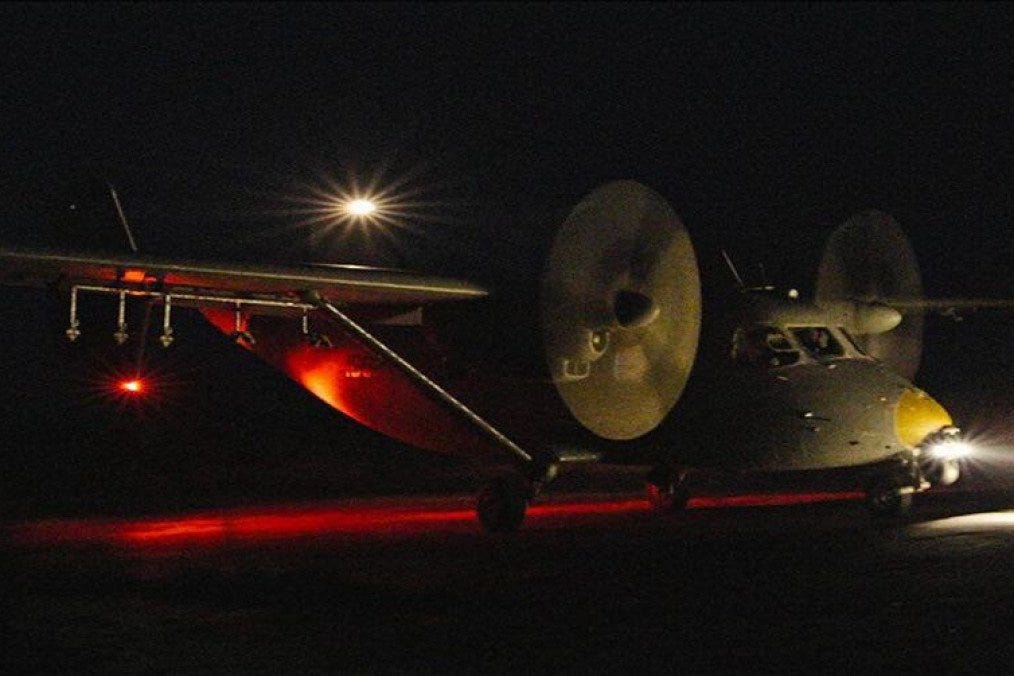
This story was commissioned by Euromaidan Press. Since Substack pays only around a fifth of my bills, I have no choice but to take on a lot of freelance work. I still want my Substack audience to know where to read those freelance stories, however. Hence this excerpt.
Russia’s air-to-air Shaheds haven’t shot down a Ukrainian plane or helicopter.
Yet.
But Russia keeps building them. Three documented cases in five months suggests the experiment isn’t ending—which leaves Ukrainian aircrews with a question about which of their aircraft are actually at risk.
Ukraine’s fastest drone interceptors probably aren’t in much danger. But its slower ones may be vulnerable.
In December, the Russians armed at least one Shahed with an R-60 infrared-guided dogfighting missile. Continuing the experiment in January, they armed another Shahed with the missile from a Verba infrared-guided man-portable air-defense system. A surface-to-air missile adapted for air-to-air use.
Four months later on or just before Tuesday, an interceptor drone operated by the Ukrainian Territorial Defense Forces spotted another R-60-armed Shahed—and apparently knocked it out of the sky.
There’s no evidence either the R-60 Shahed or Verba Shahed has shot at a Ukrainian aircraft—to say nothing of shooting down a Ukrainian aircraft. The missiles probably aren’t the main problem, however. The main problem, most likely, is the command-and-control network that supports the Shahed barrages.
Read the rest at Euromaidan Press.
Help Trench Art Grow To 700 Paid Subscribers

It took a year of hard work, but Trench Art just climbed past 600 paid subscribers! Celebrate with me and keep the momentum going with a 20% discount on paid subscriptions. Just $36 a year for daily war news and analysis.Trench Art is a reader-supported publication. To receive new posts and support my…