

by DAVID AXE
Overnight on Oct. 14 and 15, the Ukrainian navy fired a clutch of Long Neptune cruise missiles at Borisoglebsk air base in Voronezh, in western Russia some 260 km from the border with Ukraine.
The results were devastating. The ground-launched Neptunes struck the tarmac where six Russian air force Sukhoi Su-34 fighter-bombers were parked nearly wingtip to wingtip in uncovered positions.
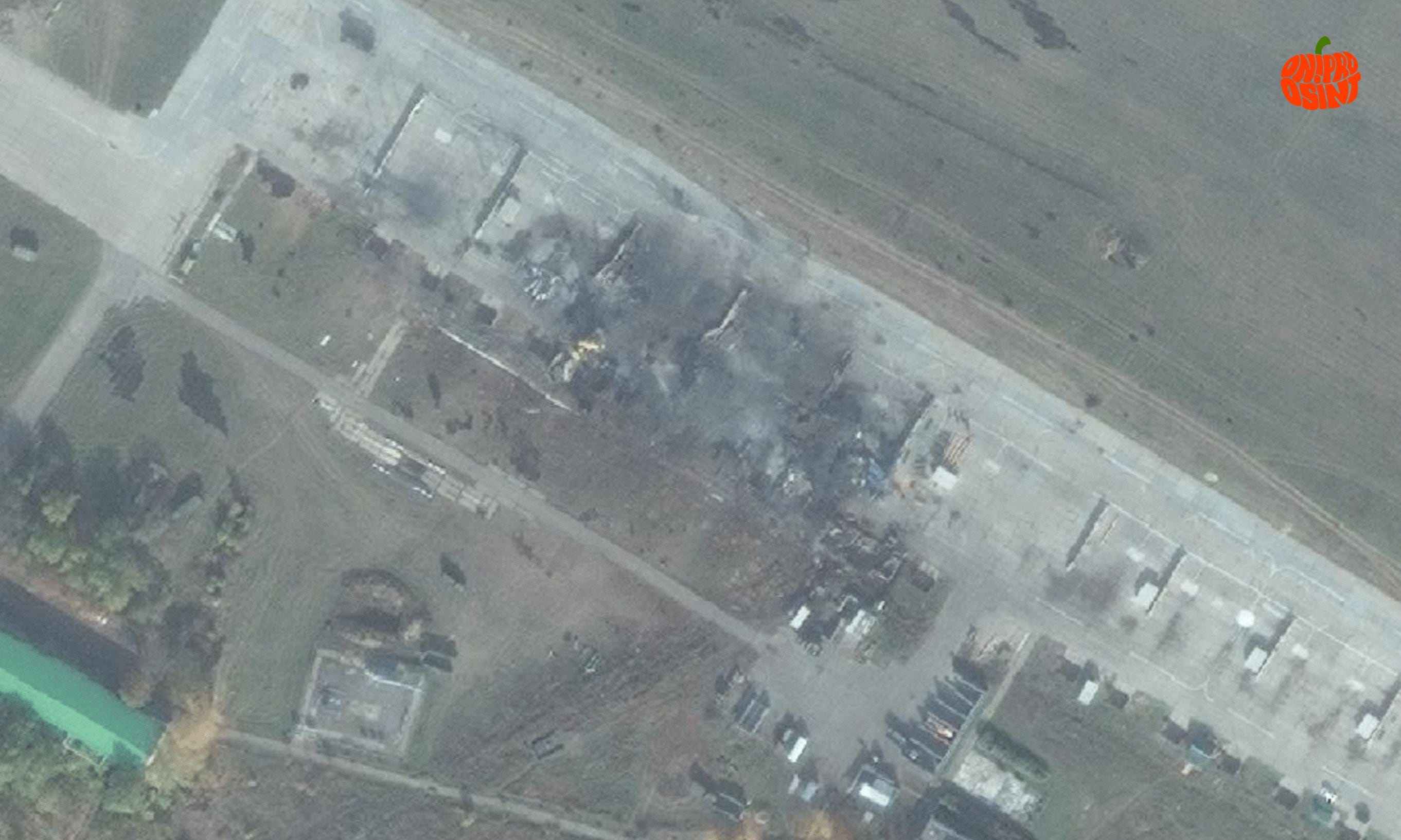
Satellite imagery from the morning of Oct. 15 depicted piles of smoldering wreckage. The navy said it hit all six jets. Ukrainian Pres. Volodymyr Zelensky said four Su-34s were destroyed and a further two were damaged. “I thank the warriors of the Ukrainian navy for their precision!” he wrote.
The jets, he said, were loaded with aerial bombs and ready for new strikes on Ukraine. An analyst reading the imagery counted wreckage of two to four aircraft and two empty spots where damaged jets had been moved.
An Airbus Pléiades satellite image from Oct. 11, four days before the strike, showed the six Su-34s on open aprons. Next to them were structures that the Russian independent outlet Istories said looked like anti-drone nets or their frames. Nets can snag a small drone. A cruise missile goes through.
At roughly $50 million apiece, by the Ukrainian air force’s estimate, the four destroyed jets alone cost Russia some $200 million. The twin-engine, two-seat, supersonic Su-34 is the Russian air force’s best fighter-bomber. Almost every day, Su-34s lob KAB precision glide bombs at Ukrainian troops and civilians.
In nearly 56 months of hard fighting in Russia’s wider war on Ukraine, the Russians have now lost no fewer than 37 Su-34s destroyed, with several more damaged, by open-source counts. Sukhoi continues to deliver new Su-34s in small batches, the latest handed over on Oct. 7, helping the Russians sustain their overall inventory despite heavy losses.
They’ve still got plenty of Su-34s, but that doesn’t mean the Russians shouldn’t worry. As long as they’re parking warplanes out in the open within range of Ukraine’s best deep strike munitions, those planes are vulnerable to attack. Russia’s air defenses are spread too thin to intercept every Ukrainian munition.
The strike may also hit the Russian air force’s training pipeline. Borisoglebsk air base is home to the 160th Aviation Training Regiment. The regiment operates Yakovlev Yak-130 trainers for more basic flight training plus—for more advanced training—front-line combat aircraft including Su-34s, Sukhoi Su-35s and Sukhoi Su-30s.
Read the rest at Euromaidan Press.
20% Off Paid Subscriptions!

Help keep Trench Art going by taking 20% off a paid subscription! That’s just $36 a year for daily war news and analysis.Trench Art is a reader-supported publication. To receive new posts and support my work, consider becoming a free or paid subscriber.