

It was the US Navy’s controversial and unlikely proposal to build an enormous 35,000-ton Trump-class battleship armed with lasers, hypersonic missiles and a railgun that grabbed the headlines in a December announcement about the future fleet. But that masked a much more serious move.
In a heady six months starting last summer, USN leaders made four important decisions that could add significant tonnage to the fleet, and soon. Given China’s rate of warship construction (it is churning out vessels at an incredible rate), this is critical to ensuring the USA has enough ships.
Whether and when the added tonnage will deliver significant added firepower remains to be seen, however. It’s an expansion that risks creating a hollow fleet—one that’s long on hulls and short on missiles.
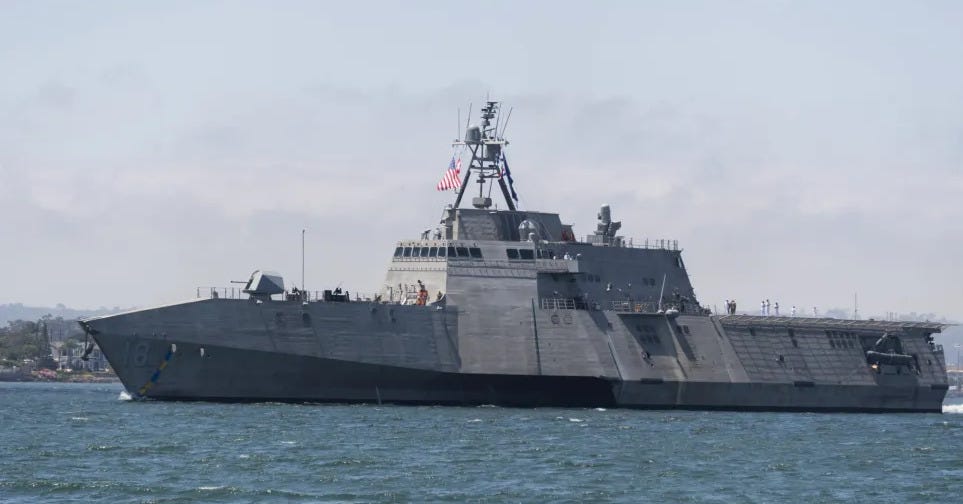
Recent USN decisions aim to boost what the Americans describe as small surface combatants, that is, warships that are smaller and cheaper than the fleet’s current 9,000-ton, $2.5bn destroyers, but still possess seagoing qualities and combat capability.
These small combatants are widely seen as the key to growing the front-line fleet from today’s roughly 290 ships to the longstanding objective of 350 or more. And if the Navy can put a lot of small combatants in the water, quickly, it could inspire other Western navies that have also struggled to add mass—and thus struggled to keep pace with the fast-growing Chinese navy.
There are rocks in those programmatic shoals, however. Most worryingly, the Americans haven’t quite decided how to properly arm all those new ships they plan to build.
Read the rest at Europe’s Edge.
20% Off Annual Subs For Valentine's Day!

Make love not war this month at Trench Art. We’re cutting the price of an annual subscription by 20% through Valentine’s Day. Subscribe now for daily war new and analysis.