

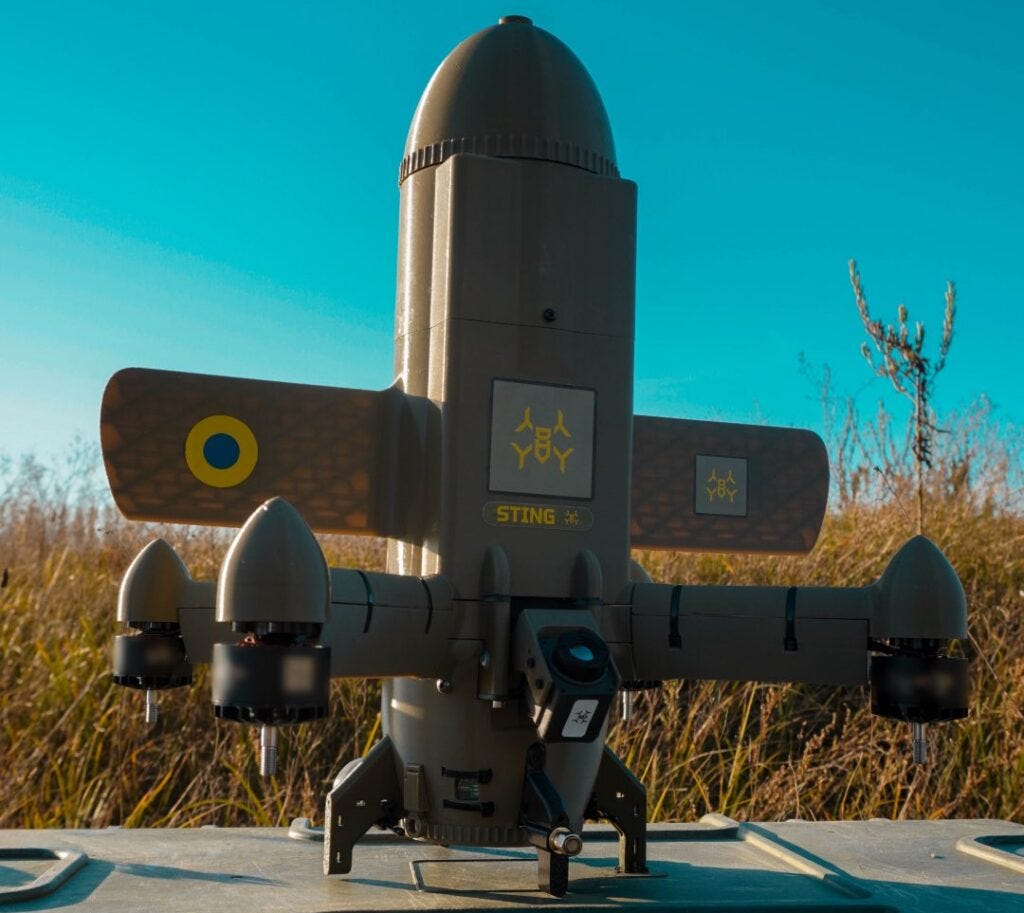
The deep strike calculus was already changing for all the world’s leading military powers when, back in August, Ukraine dramatically illustrated the shifting balance of power by revealing a powerful and inexpensive new cruise missile, the Flamingo.
The six-ton, 3,000-kilometre-range missile is priced at $500,000 per round, a quarter the cost of a U.S. Tomahawk cruise missile. Since early this year, Ukraine has been shooting the fiberglass Flamingos with their second-hand turbofan engines at Russian targets in occupied Ukraine and in Russia itself.
Cheap missiles and one-way attack drones in the class of the Iranian-designed, $50,000 Shahed (in effect, propeller-driven cruise missiles) are proliferating faster than cheap defenses against them are proliferating. That means, for now, the countries with the bigger deep strike arsenals have an edge over their opponents. They can strike relentlessly, suppressing the enemy’s defenses, disrupting their command and control, severing their supply lines and terrorizing their population.
That could change, however. Cheap interceptor drones can defeat cheap attack drones. More importantly, new electromagnetic warfare systems can jam munitions’ navigation across wide areas, sending both missiles and drones flying off course—on a budget.
Both types of systems should be top priorities for U.S. and allied forces in the western Pacific. Erecting affordable, scalable defenses against Chinese missiles and drones would allow U.S. and allied forces to deploy their own deep strike munitions to greatest advantage. They could pummel Chinese forces without taking the same beating in return.
Read the rest at The Strategist.
