

by MITCH SWENSON
In 1915 a German U-boat torpedoed the British passenger ship Lusitania, killing more than 1,100 people. The sinking of the ocean liner sparked protests across Western Europe.
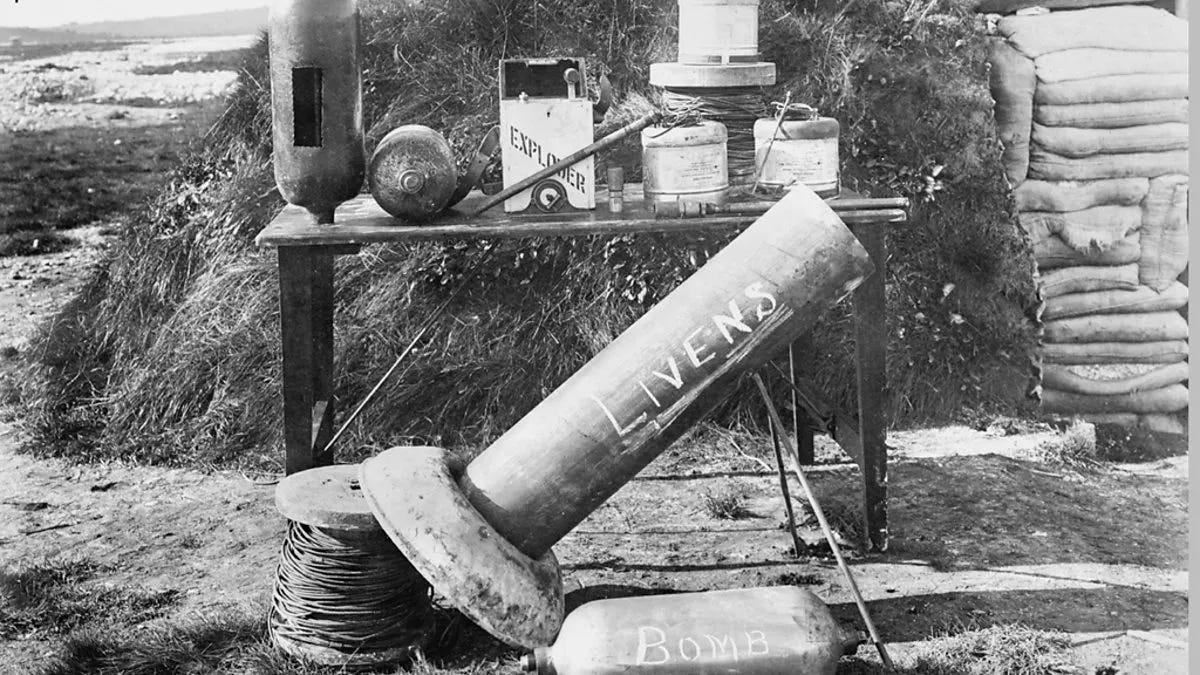
One young Cambridge graduate named William Howard Livens vowed to kill as many German soldiers as civilians died on the Lusitania. And thanks to his devious new chemical weapons, he almost certainly succeeded.
Livens’ creations ultimately gave the British Army a big advantage over the Germans in the blooming field of chemical warfare. The Livens Projector in particular became one of the staples of the Allied Powers owing to its cheap, simple and powerful design.
By the second year of World War I in 1915, Allied and Central Powers troops were deep in their respective trenches across Western Europe. Military leaders were desperate for new methods of breaking defensive lines.
It was Germany that shattered the Hague Convention and used poison weapons first. But the Germans’ methods of chemical warfare were primitive.
In the spring of 1916, German soldiers opened thousands of chlorine cylinders on the front lines of Hulluch, Flanders, expecting the wind to carry the immense cloud of noxious gas across no man’s land and toward the enemy.
However, when the wind changed course, so did the cloud, inflicting more than a thousand German casualties. Livens aimed to refine chemical weapons to make them safer to deploy.
