

by STEVE WEINTZ
On May 1, 1960, the Soviet Union shot down a CIA Lockheed U-2 spy plane and captured its pilot, Francis Gary Powers. It was an international crisis for America’s intelligence agencies.
A planned summit between Pres. Dwight Eisenhower and Premier Nikita Khrushchev was scuttled, much to Eisenhower’s embarrassment and to the fury of the Pakistanis, from whose territory the flight had been launched.
First flown in 1957, the 63-foot-long, jet-powered U-2—capable of flying as high as 70,000 feet—is still used by the U.S. Air Force. But after the Powers incident, basing the plane in foreign countries became problematic. Their mere presence caused heartburn in diplomatic circles. Time-sensitive targets could be lost to prolonged negotiations over basing rights.
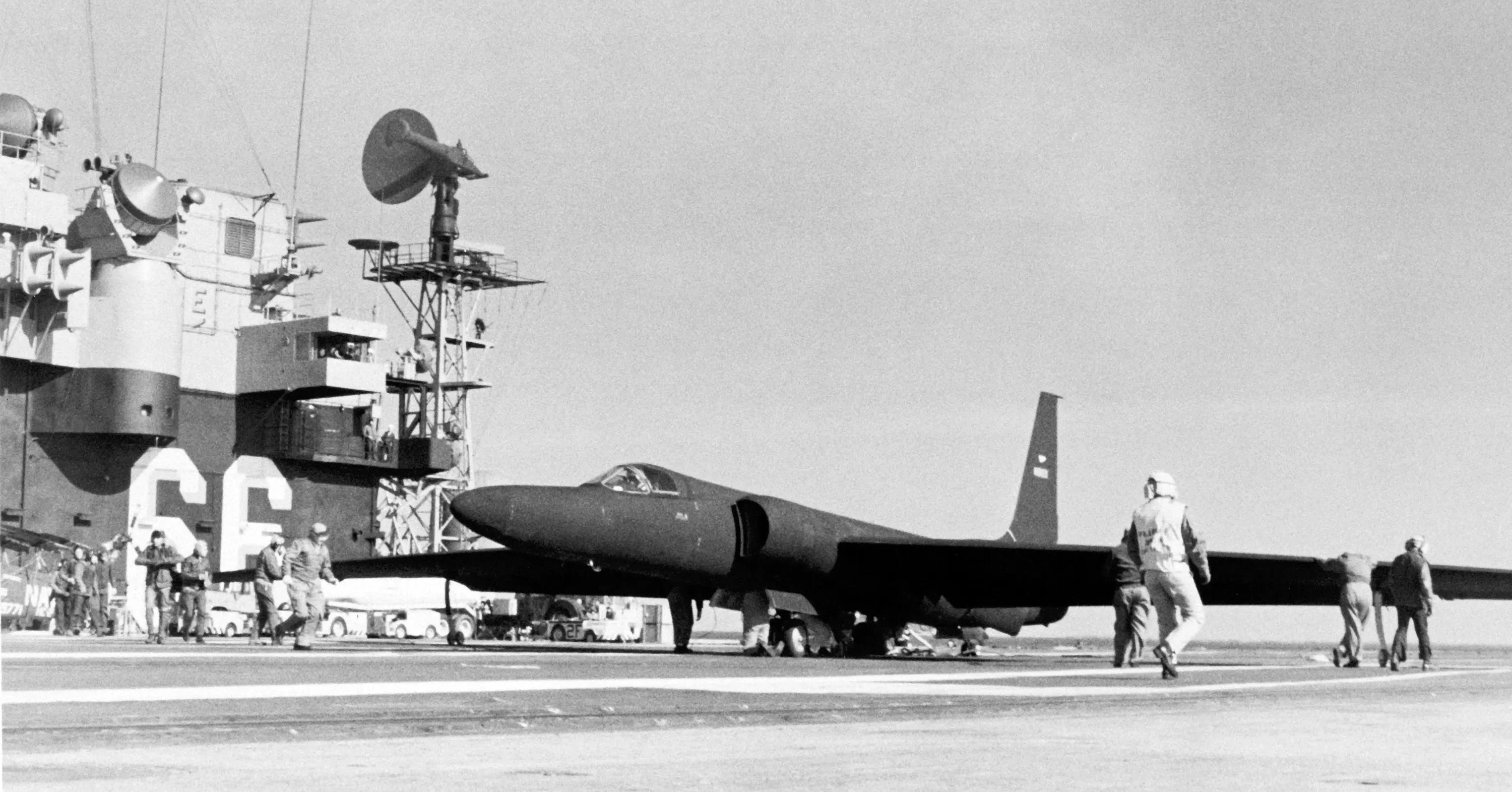
One solution was to put the U-2, nicknamed “Dragon Lady,” on aircraft carriers. After all, as the U.S. Navy often puts it, an aircraft carrier is four acres of sovereign American territory anywhere in the world it sails.
In fact, the idea of deploying U-2s from carriers was brought up as early as May 1957, only a year after the aircraft’s secret debut. However, U-2 development and operations were joint efforts by the CIA and the Air Force, and the idea was shot down by the flying branch on grounds that adequate land bases were available.
It’s not clear why three years passed between Powers’ shoot-down and the revival of the U-2 carrier-launch concept. During that time, the U-2s were kept busy spying on the Soviet Union, China and Cuba.
Documents declassified in the last decade allow us some insight into the project. On May 25, 1963, Lt. Gen. Marshall Carter, the deputy director of the CIA, received a memo he’d requested from James Cunningham, the deputy assistant director for the CIA’s covert Special Activities Division, regarding U-2 carrier operations.
While the advantages of such operations—no foreign entanglements and timely stealthy deployment—were salient, the problems were notable.
First, was it even possible to launch and recover such a broad-winged from a windy, heaving carrier deck? Second, how easily could the big planes be integrated into existing Navy operations? Third, could such secret planes and their missions be kept secure from the carrier’s busy crew?
